
What Is Hanwoo? A Complete Guide to Korean Hanwoo Beef, Grades, Marbling & Cuts
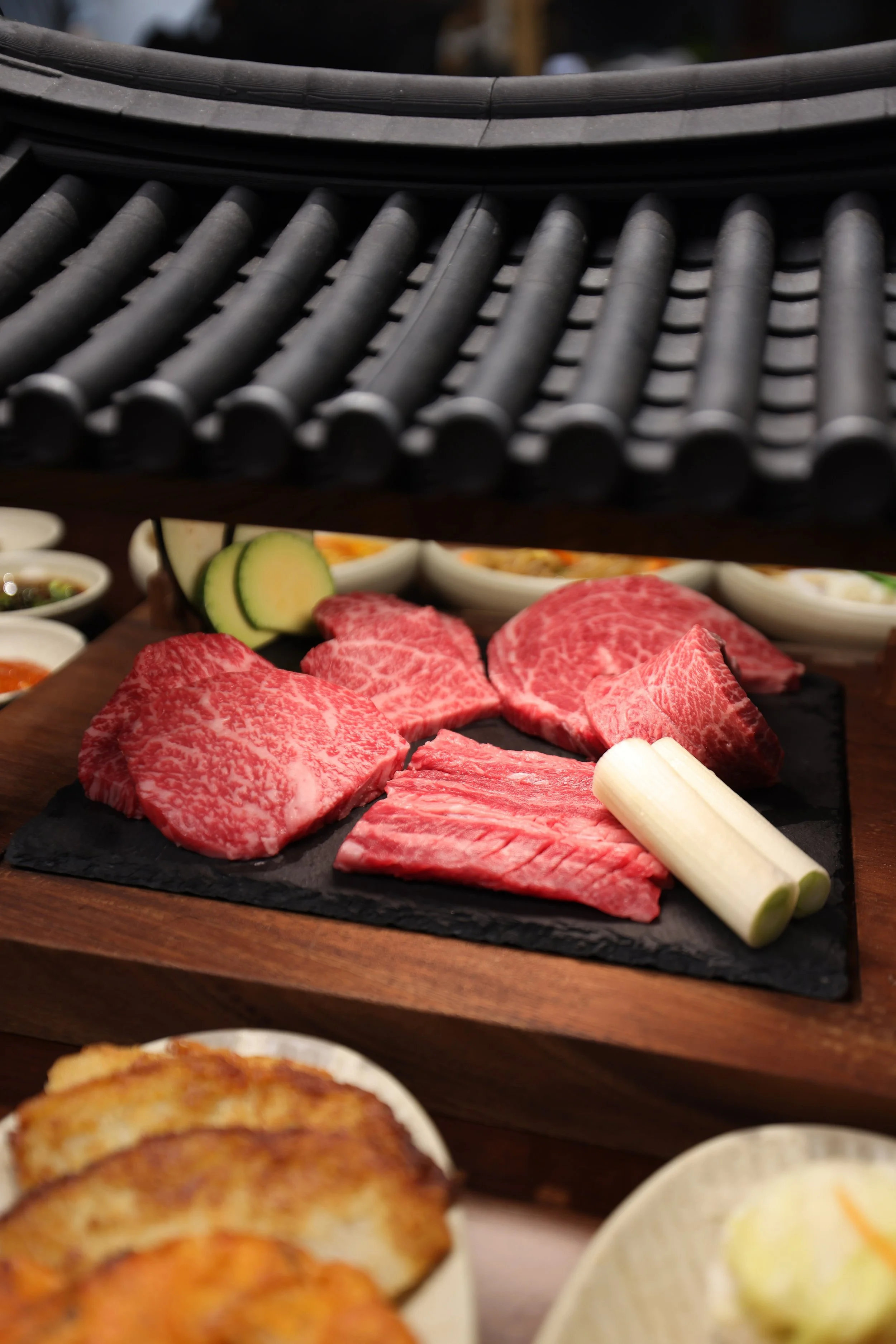
For many visitors to Korea, the word Hanwoo first appears on the menu of a Korean barbecue restaurant. It may be written as 한우, translated simply as “Korean beef,” and accompanied by unfamiliar markings such as 1++, 1+, or 1++(9). The price is often noticeably higher than ordinary beef, which naturally raises a question: what exactly is Hanwoo, and why is it considered so special in Korea?
The simplest answer is that Hanwoo is a native Korean cattle breed. But that definition barely begins to explain its importance.
Hanwoo is closely connected to Korea’s agricultural history, food culture and modern livestock industry. Once valued primarily as working cattle, Hanwoo has been selectively developed over decades into one of Korea’s most prized sources of beef. Modern breeding programs, carefully controlled production, a national grading system and livestock traceability have all contributed to the Hanwoo industry that exists today.
Premium Hanwoo is particularly known for its ability to develop significant intramuscular fat, better known as marbling. When properly raised, graded, cut and cooked, this marbling can produce beef that is exceptionally tender and juicy while still retaining a distinctive beef flavor.
For international diners, Hanwoo is sometimes introduced as “Korean Wagyu.” While the comparison may help communicate that Hanwoo is premium and can be highly marbled, it is ultimately misleading. Hanwoo and Wagyu are different cattle populations with different histories, genetics, grading systems and culinary traditions.
To properly understand Hanwoo, it is necessary to look beyond marbling alone.
This guide explains what Hanwoo is, where it comes from, how Korean beef grading works, what 1++ Hanwoo actually means, why Hanwoo tastes different, which cuts are worth knowing, how Hanwoo compares with Wagyu and other beef, why it can be expensive, and how to enjoy it in Korea.
What Is Hanwoo?
Hanwoo, written 한우 in Korean, refers to Korea’s native cattle breed commonly raised for beef production today.
The term should not simply be interpreted as “any beef produced in Korea.” Other breeds of cattle can also be raised domestically, meaning Korean domestic beef and Hanwoo are related concepts but are not automatically the same thing.
Traditional Hanwoo cattle are generally recognizable by their yellowish-brown coat. There are also other native Korean cattle populations, including Chikso and black cattle varieties, but the brown Hanwoo familiar to most consumers is the breed most strongly associated with premium Korean beef.
This distinction matters when reading menus or shopping for beef in Korea.
If a restaurant serves Hanwoo, the term 한우 specifically refers to the cattle breed rather than simply indicating that the meat was produced somewhere in Korea.
That is one of the first pieces of terminology worth understanding before exploring Korean beef in greater depth.
The History of Hanwoo in Korea
Hanwoo did not begin its history as a luxury food.
For much of Korea’s agricultural past, cattle were highly valuable working animals. They played an important role in farming and rural life, helping with agricultural labor and transportation long before modern machinery became common.
Their economic value therefore extended far beyond meat.
As Korea industrialized and farming became increasingly mechanized during the twentieth century, the role of cattle gradually changed. Tractors and other agricultural machinery reduced the need for draft animals, while rising incomes and changing food consumption patterns increased demand for beef.
Hanwoo breeding consequently began moving toward meat production.
Organized improvement of Hanwoo for beef characteristics developed progressively during the second half of the twentieth century. Breeding programs increasingly focused on traits such as growth, carcass yield, meat quality and the ability to develop desirable intramuscular fat.
Modern genetic evaluation has made Hanwoo breeding even more sophisticated. Breeders can now use performance data and genomic information alongside traditional selection methods to identify desirable characteristics more effectively.
The Hanwoo served in restaurants today is therefore the product of two very different periods of Korean history.
Its roots lie in Korea’s traditional agricultural society, while modern Hanwoo beef reflects decades of livestock science, selective breeding and changes in Korean food culture.
Understanding that transformation helps explain why Hanwoo has cultural significance beyond its reputation as expensive beef.
What Makes Hanwoo Beef Different?
There is no single characteristic that makes Hanwoo distinctive.
Breed genetics certainly matter, but the final quality of the beef is also influenced by feeding, age, animal management, individual genetics, cut selection, fat distribution, grading and cooking.
One of the characteristics most strongly associated with premium Hanwoo is intramuscular fat.
Intramuscular fat develops inside the muscle rather than simply surrounding it. When visible, it creates the small white streaks and flecks commonly known as marbling.
Marbling has a major influence on the eating experience because fat behaves differently from lean muscle during cooking. As the meat is heated, intramuscular fat softens and melts, influencing juiciness, texture, aroma and perceived richness.
Premium Hanwoo can develop substantial levels of this fat.
However, it is important to separate the concept of breed from the concept of grade.
Hanwoo tells you what cattle the beef came from. It does not automatically tell you how highly the carcass was graded.
Not every piece of Hanwoo is heavily marbled, and not every Hanwoo animal receives the highest quality grade.
This distinction becomes especially important when understanding labels such as 1++, 1+, 1, 2 and 3.
Understanding the Korean Hanwoo Grading System
Korea uses a standardized beef grading system that evaluates carcasses after slaughter.
For diners, the most recognizable part of this system is the quality grade.
The official beef quality grades are:
1++, 1+, 1, 2, 3
Among these categories, 1++ is the highest official quality grade.
It is tempting to assume that these numbers refer exclusively to marbling, but the system is more complex than that.
Quality assessment considers several characteristics of the carcass, including marbling, meat color, fat color, texture and maturity.
Marbling has a particularly important influence on higher quality grades, but Korean beef is not officially graded by looking at visible fat alone.
This distinction is useful because consumers often reduce the entire Hanwoo grading system to one idea: more white lines equal better beef.
In reality, grading attempts to evaluate several characteristics together.
What Does 1++ Hanwoo Mean?
1++ is the highest quality-grade category used for Korean beef.
For many diners seeking premium Hanwoo, it is the grade they are most likely to notice advertised by specialist restaurants and butcher shops.
However, the 1++ category itself contains additional information.
Under Korea’s current grading system, beef classified as 1++ may have a marbling score of 7, 8 or 9.
As a result, you may see labels such as:
1++(7)
1++(8)
1++(9)
The number in brackets refers to the meat’s marbling score.
It does not refer to the percentage of fat in the beef.
For example, 1++(9) does not mean the meat contains nine percent fat. It means that it received the highest marbling score within the official scale used in the grading process.
This also explains why two pieces of beef can both legitimately be described as 1++ Hanwoo while displaying noticeably different amounts of visible marbling.
Understanding this detail makes Korean beef labels much easier to interpret.
What Is the Difference Between Quality Grade and Yield Grade?
Another source of confusion is the appearance of the letters A, B and C on Korean beef information.
These are not additional quality grades.
They are yield grades.
Yield grading estimates how much usable meat is likely to be obtained from a carcass. Factors including carcass weight, backfat thickness and the size of the loin-eye area are used in this evaluation.
Quality grading, by comparison, is intended to describe characteristics associated with the eating quality of the beef.
This means an A yield grade does not automatically mean the beef will taste better than beef receiving a B or C yield grade.
For diners choosing Hanwoo at a restaurant, the quality grade and individual cut generally provide more immediately useful information than the yield grade.
Is 1++ Hanwoo Always the Best Hanwoo?
1++ is officially the highest quality grade, but that does not necessarily mean every diner will prefer every 1++ cut over everything else.
Personal preference still matters.
A diner who loves intensely rich, highly marbled beef may naturally be drawn toward heavily marbled 1++ cuts. Another person may prefer a stronger lean-beef character and slightly less richness.
The cut is equally important.
A 1++ tenderloin does not provide exactly the same experience as a 1++ rib or loin cut. The muscles differ in structure, tenderness, fat distribution and flavor.
Cooking technique changes the experience again.
For this reason, understanding premium beef is more useful than simply searching for the highest possible number.
A knowledgeable diner considers breed, grade, marbling, cut and cooking method together.
What Does Hanwoo Taste Like?
Hanwoo is frequently described using words such as “buttery,” but that description is incomplete.
Premium Hanwoo can certainly produce an exceptionally soft and rich mouthfeel, particularly in highly marbled cuts. However, good Hanwoo also retains a recognizable savory beef character.
As intramuscular fat melts during grilling, it contributes to both juiciness and aroma. The interaction between fat, muscle proteins and heat produces the roasted and savory aromas associated with freshly grilled beef.
Research into Hanwoo has also examined its fatty-acid composition and compounds associated with flavor. Oleic acid, a monounsaturated fatty acid, is often discussed in scientific research concerning highly marbled beef and sensory characteristics.
Research on Korean native cattle has also identified differences in amino acids, metabolites and volatile compounds associated with umami, sweetness and cooked-meat aroma.
For diners, these scientific differences ultimately translate into something simpler.
Well-prepared Hanwoo can offer a combination of richness, tenderness, juiciness, savory depth, subtle sweetness and pronounced beef flavor.
The exact balance depends heavily on the cut.
A heavily marbled loin cut may feel luxurious and rich, while a leaner section may place greater emphasis on the natural flavor and texture of the meat.
This is one reason tasting several Hanwoo cuts during the same meal can be more rewarding than ordering only one.
Hanwoo Marbling: Why Does It Matter?
Marbling is one of the most visible characteristics of premium beef and one of the main reasons Hanwoo attracts attention.
The thin streaks of intramuscular fat distributed through the muscle influence several parts of the eating experience.
First, fat affects tenderness. As the beef cooks, intramuscular fat softens and can reduce the perception of dryness or toughness.
Second, fat contributes to juiciness. Melted fat coats the mouth and changes how moisture and texture are perceived.
Third, fat acts as an important carrier of flavor compounds. This means marbling can influence both the intensity and persistence of beef aroma.
However, more marbling does not automatically make every cut objectively better.
Extremely rich beef can become overwhelming in large quantities, and some diners prefer a greater proportion of lean meat.
The ideal level of marbling therefore depends on the desired dining experience.
For someone tasting premium Hanwoo for the first time, comparing cuts with different fat distributions can be much more informative than focusing solely on the highest marbling score.
Is Hanwoo Healthy?
Hanwoo is sometimes promoted with exaggerated nutritional claims, particularly when discussing the fatty-acid composition of its marbling.
There is legitimate scientific interest in Hanwoo fat.
Research has examined the proportion of monounsaturated fatty acids found in Hanwoo, including oleic acid. These fatty acids contribute to the physical properties and flavor of beef fat.
However, this should not be interpreted as meaning that heavily marbled Hanwoo can be consumed without considering total fat and calorie intake.
Highly marbled beef naturally contains more fat than lean beef.
Hanwoo is also a source of the nutrients associated with beef generally, including high-quality protein, iron, zinc and vitamin B12, although the exact nutritional profile varies considerably depending on the cut and amount of fat.
The sensible way to understand Hanwoo is as a premium beef product rather than a health food.
Its grade is designed primarily to communicate characteristics related to meat quality rather than nutritional superiority.
Hanwoo vs Wagyu: Are They the Same?
No.
One of the most common misconceptions about Hanwoo is that it is simply Korean Wagyu.
Hanwoo and Wagyu can both produce highly marbled beef, which explains why the comparison is frequently made. Beyond that similarity, however, they belong to different cattle populations and different beef traditions.
Hanwoo is Korean. Wagyu is Japanese.
Wagyu refers to Japanese cattle breeds, while Hanwoo refers to Korea’s native cattle breed.
Their breeding histories are different, their genetics are different and their national beef grading systems are different.
This is particularly important when comparing labels.
A Korean 1++ grade cannot simply be converted into a Japanese A5 grade.
Japan and Korea assess beef according to separate systems. Although both systems consider characteristics related to meat quality and yield, the terminology and grading criteria should not be treated as interchangeable.
Flavor comparisons are also difficult to generalize.
Individual animals, feeding programs, marbling levels, cuts, aging and preparation methods can all influence the final eating experience.
The most useful way to think about Hanwoo and Wagyu is not as substitutes for one another, but as two separate premium beef traditions developed in neighboring countries.
Hanwoo vs Angus Beef
Angus provides another useful comparison because many international diners are already familiar with Angus beef.
Angus originated in Scotland and is now raised extensively around the world, including in the United States and Australia.
Because Angus cattle are raised under many different farming and feeding systems, the term “Angus” by itself does not guarantee one particular level of marbling or quality.
Hanwoo is more closely tied to Korea’s domestic livestock industry and national beef grading system.
Studies comparing Hanwoo with other cattle have identified differences in intramuscular fat and fatty-acid composition under specific production conditions. However, breed alone should never be used to claim that every piece of Hanwoo is automatically superior to every piece of Angus.
High-quality beef is influenced by many factors.
Hanwoo’s appeal comes from the combination of breed characteristics, Korean production methods, grading, traceability and its role within Korean food culture.
The Hanwoo Cuts to Know
One of the best ways to understand Hanwoo is to compare different cuts from the same premium beef tradition. Marbling may be the characteristic most commonly associated with Hanwoo, but each part of the animal offers a different balance of richness, tenderness, texture and beef flavor.
At Hanwoojeong, the Hanwoo selection focuses on cuts that allow these differences to be experienced clearly, including 꽃등심 (Kkot Deungsim), 채끝 (Chaekkeut), 안심 (Ansim), and 갈비살 (Galbisal).
꽃등심 (Kkot Deungsim) – Ribeye
Kkot deungsim, often translated as ribeye, is one of the cuts most strongly associated with premium Korean Hanwoo. The word kkot means “flower” in Korean, referring to the flower-like pattern created by fine marbling distributed through the meat.
This is typically one of the richer Hanwoo cuts. As the intramuscular fat begins to render on the grill, it contributes to a soft texture, pronounced juiciness and the rich aroma that many diners expect from highly marbled 1++ Hanwoo.
Kkot deungsim is particularly useful for understanding why marbling matters in Korean beef. The contrast between red muscle and finely distributed fat is visible before the meat reaches the grill, but its real character becomes apparent once heated, when the fat softens and enhances both flavor and mouthfeel.
For diners experiencing Hanwoo for the first time, kkot deungsim provides a clear introduction to the richness for which premium Hanwoo is famous.
채끝 (Chaekkeut) – Striploin
Chaekkeut, commonly translated as striploin, offers a different balance.
While it can still display beautiful marbling, chaekkeut generally allows the natural flavor and structure of the beef to remain more noticeable alongside the richness of the fat. The result is a cut that combines tenderness, juiciness and a pronounced beef flavor without relying entirely on extreme richness.
This balance makes chaekkeut particularly appealing when several Hanwoo cuts are being eaten during the same meal. Compared with a richly marbled ribeye, it can feel more structured and meat-forward while still providing the tenderness expected from premium Korean beef.
For diners who want to appreciate both the marbling and the underlying character of Hanwoo itself, chaekkeut is one of the most informative cuts to try.
안심 (Ansim) – Tenderloin
Ansim, or tenderloin, demonstrates that excellent Hanwoo is not defined by marbling alone.
The tenderloin is a muscle that performs relatively little physical work, which gives it an exceptionally soft and delicate texture. It is generally leaner than heavily marbled ribeye cuts, yet it can be remarkably tender.
Rather than delivering the same intense richness as kkot deungsim, ansim places greater emphasis on texture and the clean flavor of the meat itself. This contrast makes it particularly valuable when tasting several cuts side by side.
Eating ansim alongside a more heavily marbled cut also makes one of the most important lessons about Hanwoo immediately clear: tenderness and marbling are not the same thing. A cut can be extraordinarily tender without having the densest visible fat.
갈비살 (Galbisal) – Boneless Rib Meat
Galbisal refers to meat taken from around the ribs and is valued for its combination of rich beef flavor, juiciness and distinctive texture.
Unlike tenderloin, which is known primarily for softness, galbisal offers more noticeable bite and a deeper meat character. Fat distributed around the rib area contributes richness, while the muscle itself retains enough structure to give the cut a satisfying texture when grilled.
This makes galbisal particularly interesting after tasting the more familiar loin cuts. It demonstrates another side of Hanwoo: one in which flavor and texture can be just as important as extreme tenderness.
When cooked carefully over the grill, galbisal develops a pronounced roasted-beef aroma and savory character that pairs naturally with simple Korean accompaniments.
Comparing Hanwoo Cuts at the Table
The differences between these cuts are easier to understand through tasting than through grading terminology alone.
Kkot deungsim highlights marbling and richness. Chaekkeut provides a balance between marbling and beef flavor. Ansim emphasizes delicate tenderness, while galbisal introduces a firmer texture and deeper savory character.
Together, they show why choosing Hanwoo should involve more than simply looking for the highest grade or the most visible marbling.
A 1++ grade tells you important information about the assessed quality of the beef, but the individual cut determines how that quality is experienced.
For this reason, tasting several Hanwoo cuts during the same meal can offer a much better introduction to Korean beef than ordering only the fattiest piece available. Each cut reveals a different aspect of what makes Hanwoo distinctive, from the richness of finely marbled ribeye to the delicate texture of tenderloin and the stronger beef character found around the ribs.
Why Is Hanwoo So Expensive?
Hanwoo can be substantially more expensive than imported beef in Korea, especially when discussing premium cuts from highly graded animals.
Several factors contribute to the price.
Producing highly marbled beef requires significant time, feed and management. Hanwoo raised for premium beef often undergoes relatively long finishing periods so that the animals have sufficient time to develop the characteristics desired by producers and consumers.
Selective breeding also represents decades of investment.
Modern Hanwoo production relies on breeding programs designed to improve desirable traits, and genetics can significantly influence growth, carcass characteristics and marbling potential.
Domestic supply is another factor.
Hanwoo belongs primarily to Korea’s domestic cattle industry and exists on a much smaller scale than the enormous international beef supply chains supporting imported beef.
Demand for premium Hanwoo remains strong within Korea.
Finally, the most desirable grilling cuts represent only a limited part of each animal. A whole animal cannot become tenderloin or premium loin.
When consumers compete for relatively small quantities of highly desirable cuts from highly graded domestic cattle, prices naturally rise.
This is why Hanwoo pricing can vary dramatically according to both grade and cut.
How Korea Tracks Hanwoo Beef
One of the most interesting parts of the Korean beef industry is its livestock traceability system.
Cattle are assigned identification information that allows beef products to be connected with records concerning the animal.
Consumers can use Korea’s official livestock traceability system to search cattle information using the relevant identification number.
Depending on the record, information may include details such as cattle type, rearing information and carcass grading.
This provides an additional level of transparency for consumers purchasing premium beef.
It is also important to understand the difference between traceability and grading.
Traceability helps establish information about where the beef came from and the animal associated with it.
Grading evaluates characteristics of the carcass.
Both systems contribute to understanding the beef, but they answer different questions.
Is Every Hanwoo Steak Highly Marbled?
No.
This misconception is partly created by the way Hanwoo is photographed and marketed.
Images used to introduce Hanwoo internationally often feature spectacular pieces of 1++ loin covered with fine white marbling. These photographs are visually impressive, but they do not represent every piece of Hanwoo.
Hanwoo describes the breed.
Different Hanwoo animals receive different grades, and different muscles from the same animal contain different levels of intramuscular fat.
Even meat from a highly graded carcass can look dramatically different depending on the cut.
Tenderloin, for example, may appear significantly leaner than a richly marbled section of loin from the same animal.
This is why three pieces of information should be considered separately:
Breed tells you that the beef is Hanwoo.
Grade describes the officially assessed carcass quality.
Cut tells you which muscle you are eating.
Understanding all three provides a much clearer picture of what will actually arrive at the table.
How Is Hanwoo Best Cooked?
Premium Hanwoo generally benefits from relatively simple cooking.
When the purpose is to appreciate the natural flavor, texture and marbling of the beef, excessive marinades and heavy seasoning can make it difficult to distinguish one premium cut from another.
Grilling is one of the most familiar ways to experience Hanwoo in Korea.
The surface of the meat should develop browning while the interior remains juicy. For heavily marbled cuts, relatively short cooking is often enough because the meat is already naturally tender and the intramuscular fat begins rendering quickly.
Overcooking premium Hanwoo can work against the qualities that make it desirable.
As too much moisture is lost and too much fat renders out of the meat, a luxurious piece of beef can become less balanced.
This is particularly relevant when cooking thin or small portions, which can move from properly cooked to overcooked in a very short period.
The exact ideal doneness ultimately depends on the cut and personal preference.
What Should You Eat With Hanwoo?
Hanwoo can be eaten with many of the familiar accompaniments found at Korean barbecue restaurants, but premium beef is often approached more simply at the beginning of the meal.
A small amount of salt is one of the most straightforward accompaniments.
Salt enhances flavor without hiding the difference between cuts, which makes it particularly useful when tasting premium beef for the first time.
Ssamjang offers a much stronger flavor. Made from fermented soybean and chili-based ingredients, it introduces saltiness, umami, sweetness and fermentation.
Fresh or grilled garlic can add another layer of aroma.
Banchan provides contrast between bites of rich beef. Fermented, acidic, spicy and vegetable-based side dishes can refresh the palate, particularly when eating heavily marbled cuts.
There is no single mandatory way to eat Hanwoo, but tasting the meat relatively simply at first makes it much easier to notice the differences between cuts.
In What Order Should You Eat Hanwoo?
When several cuts are served together, the order can influence how clearly their differences are perceived.
A useful approach is to begin with cuts that are comparatively delicate before moving toward richer or more intensely flavored pieces.
If an extremely fatty cut is eaten first, the richness can coat the palate and make subtler cuts more difficult to appreciate afterward.
The exact order will depend on the selection being served, but the general principle is simple:
begin lighter and gradually move toward richer flavors.
Seasonings can be approached in the same way.
Taste the first piece with minimal seasoning. Salt can be introduced next, followed by stronger accompaniments such as ssamjang, garlic or other sauces.
This progression makes it easier to understand what the beef itself actually tastes like.
Experiencing 1++ Hanwoo at Hanwoojeong
For diners who want to experience premium Korean beef in Seoul, Hanwoojeong serves 1++ Korean Hanwoo in a setting inspired by traditional Korean architecture and the atmosphere of a refined Hanwoo house.
Rather than treating Hanwoo simply as an expensive ingredient, the experience is designed around understanding the characteristics that make different cuts distinctive. Comparing marbling, tenderness, texture and beef flavor at the same table allows diners to experience how much variation can exist even within premium Hanwoo.
The setting reflects the same philosophy. Traditional Korean design influences are combined with a contemporary dining environment so that the meal remains connected to the cultural origins of the ingredient.
For first-time diners in particular, tasting several Hanwoo cuts together provides a much clearer introduction than simply ordering the most heavily marbled piece available.
Hanwoo is ultimately easier to understand once the terminology on the menu becomes something that can actually be tasted.
How to Order Hanwoo More Confidently
Ordering Hanwoo becomes much easier once you stop searching for a single number that supposedly represents the “best” beef.
Start by confirming that the meat is genuinely labelled 한우.
Next, look at the quality grade. If it is 1++, additional marbling information such as 1++(7), 1++(8) or 1++(9) may provide more detail.
Then consider the cut.
Someone who wants intense richness may prefer a heavily marbled loin cut, while someone who prioritizes tenderness without excessive fat may be more interested in tenderloin.
A diner who enjoys strong beef flavor may prefer yet another section.
Think of Hanwoo as the combination of four major elements:
breed, grade, cut and personal preference.
Once those elements are understood, Korean beef menus become considerably less intimidating.
Why Hanwoo Matters Beyond the Steak
The significance of Hanwoo extends beyond taste.
Few foods illustrate the transformation of modern Korea quite as clearly.
Cattle that once played an essential role in traditional farming became the foundation of a sophisticated modern beef industry. Today, Hanwoo production incorporates selective breeding, genetic evaluation, standardized carcass grading and individual livestock traceability.
At the same time, the final product remains closely tied to Korean dining culture.
Hanwoo appears at Korean barbecue restaurants, specialist beef houses, family celebrations and formal meals. Premium Hanwoo is also commonly associated with gifting and special occasions.
This combination of agricultural history, scientific development and food culture helps explain why Hanwoo carries more cultural weight in Korea than its price alone would suggest.
For visitors interested in Korean food, learning about Hanwoo therefore provides insight into much more than beef.
It reveals how Korea evaluates ingredients, how traditional foods adapt to modern production systems, and how agricultural products can develop into important symbols of national food culture.
Frequently Asked Questions about Hanwoo
-
Hanwoo is Korea’s native cattle breed and one of the country’s most prized sources of beef. Modern Hanwoo is raised specifically for beef production and is particularly known for its potential to develop substantial intramuscular fat, or marbling.
-
Not exactly. Hanwoo is Korean beef, but not every cow raised in Korea is Hanwoo. Other cattle breeds can also be raised domestically. The word 한우 specifically identifies Hanwoo cattle.
-
The highest official Korean beef quality grade is 1++. It is followed by 1+, 1, 2 and 3.
-
1++ indicates the highest official quality-grade category under Korea’s beef grading system. Quality assessment includes characteristics such as marbling, meat color, fat color, texture and maturity.
-
The number in brackets indicates the marbling score. Under the current system, the 1++ category can include marbling scores of 7, 8 and 9. Therefore, 1++(9) refers to 1++ beef receiving a marbling score of 9.
It does not mean the beef contains nine percent fat.
-
No. Hanwoo refers to the breed, not the grade. Hanwoo beef can receive several different quality grades.
-
No. Hanwoo is Korean, while Wagyu refers to Japanese cattle breeds. Both can produce highly marbled premium beef, but they have different genetics, breeding histories and national grading systems.
-
No. Korea and Japan use different beef grading systems, so the grades should not be directly converted. Both may indicate premium beef within their respective systems, but 1++ and A5 are not interchangeable classifications.
-
Hanwoo pricing reflects factors including domestic supply, relatively long production periods, feed costs, selective breeding, demand for premium grades and the limited quantity of desirable grilling cuts available from each animal.
Prices also vary considerably according to cut and grade.
-
Not necessarily.
Higher marbling generally creates a richer and softer eating experience, but personal preference plays an important role. Some diners prefer extremely rich meat, while others prefer a more pronounced lean-beef flavor.
-
Quality grades such as 1++, 1+, 1, 2 and 3 evaluate characteristics associated with meat quality.
Yield grades such as A, B and C estimate the amount of usable meat obtained from the carcass.
An A yield grade therefore does not automatically mean better-tasting beef than a B or C yield grade.
-
Hanwoo should not automatically be described as grass-fed.
Feeding programs vary, and premium Hanwoo production often includes concentrate or grain-based feeding during the finishing period because feeding strategy strongly influences growth and intramuscular fat development.
Understanding Hanwoo Means Looking Beyond Marbling
It is easy to reduce Hanwoo to three descriptions: Korean beef, expensive beef and heavily marbled beef.
Each contains some truth, but none tells the complete story.
Hanwoo is a native Korean cattle breed whose history stretches back through Korea’s agricultural past. The cattle that once worked alongside farmers eventually became the foundation of a modern beef industry shaped by selective breeding, livestock science, carcass grading and traceability.
Marbling has undoubtedly played a major role in the reputation of premium Hanwoo, but marbling alone does not explain the experience.
The breed matters. The individual animal matters. The grade matters. The cut matters. The distribution of fat matters. Cooking technique matters. Even the order in which the meat is eaten can influence how different cuts are perceived.
Understanding what 1++ Hanwoo really means makes Korean menus easier to read. Learning about Hanwoo grades explains why visually similar pieces of meat may be classified differently. Understanding Hanwoo cuts reveals why meat from the same animal can provide dramatically different textures and flavors. Comparing Hanwoo and Wagyu shows why premium beef traditions should not be treated as interchangeable. Learning how Hanwoo traceability works provides another perspective on the sophistication of Korea’s domestic beef industry.
Hanwoo therefore becomes more interesting the more closely it is examined.
For anyone exploring Korean cuisine beyond its most internationally famous dishes, Hanwoo provides a particularly revealing introduction to the way Korea approaches ingredients, agriculture and dining.
It is not simply premium Korean beef.
It is the result of history, breeding, science, craftsmanship and Korean food culture meeting at the same table.
VISIT HANWOOJEONG
Address: Myeongdong 3-gil 44 3rd Floor
Nearest Subway Station:
Euljiro-1-ga Station (Line 2) Exit 5, 1-minute walk
Myeongdong Station (Line 4) Exit 6, 10-minutes walk
Follow us on Instagram : @hanwoojeong
