
Hanwoo vs Wagyu: What Is the Difference Between Korean Hanwoo and Japanese Wagyu?
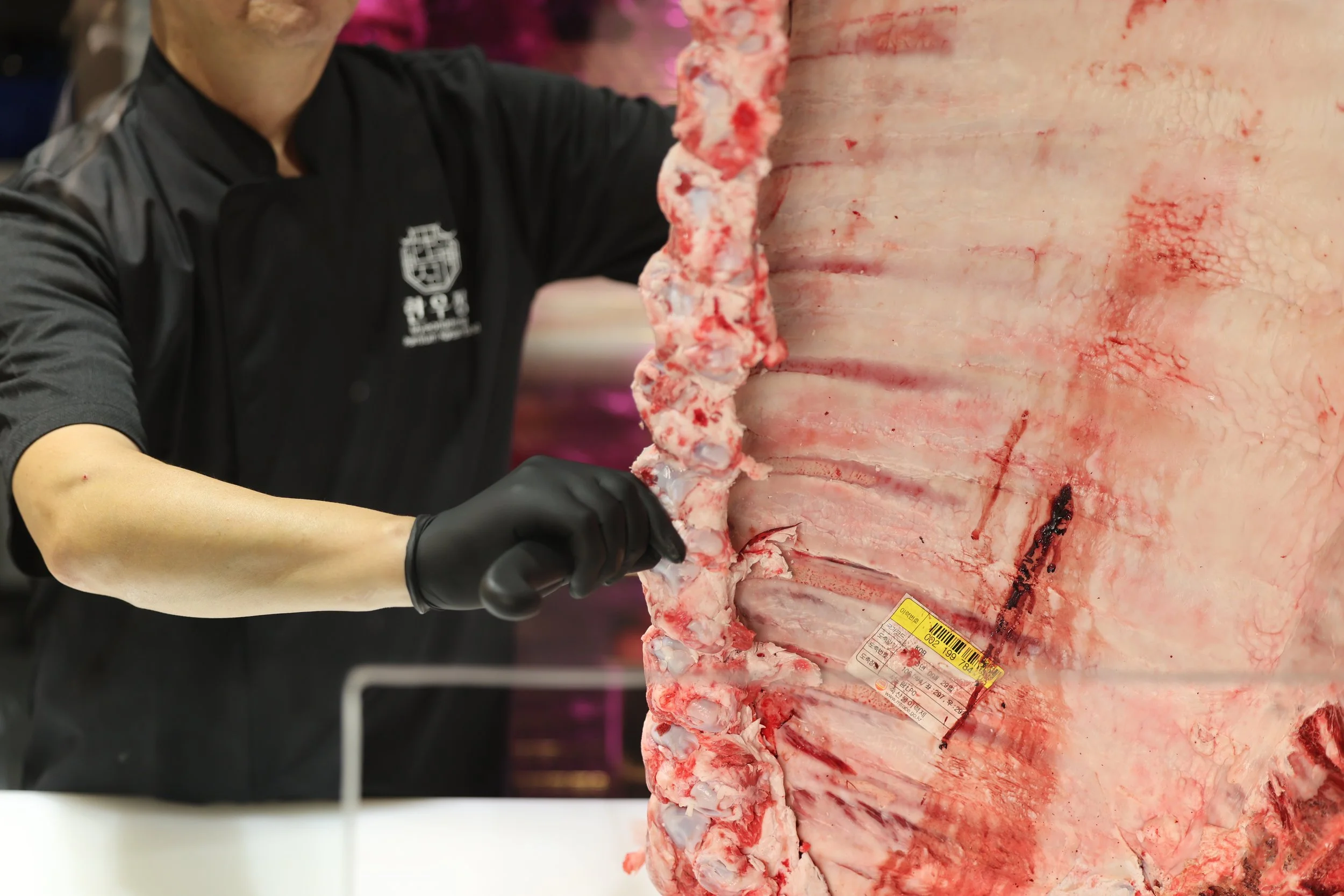
When people think about the world’s most celebrated beef, Japanese Wagyu is often one of the first names that comes to mind. Travelers arriving in Korea, however, quickly encounter another name associated with premium beef: Hanwoo.
This naturally leads to one of the most common questions among international diners visiting Korea: What is the difference between Hanwoo and Wagyu?
At first glance, the two can look similar. Both can display impressive marbling, both are associated with premium dining experiences, and both have been developed through generations of cattle breeding and careful production. Yet Hanwoo and Wagyu are not different names for the same beef. They come from different countries, originate from different cattle populations, follow different grading systems, and have developed within different culinary traditions.
Hanwoo is Korea’s native cattle and occupies a particularly important place in Korean food culture. Wagyu, meanwhile, refers to specific Japanese cattle breeds. Japan’s Ministry of Agriculture, Forestry and Fisheries identifies four primary Wagyu breeds: Japanese Black, Japanese Brown, Japanese Shorthorn, and Japanese Polled, together with qualifying crosses. Japanese Black represents the overwhelming majority of Wagyu production and is especially associated with the dense marbling for which premium Japanese beef is internationally known.
Hanwoo is a distinct Korean native cattle breed rather than a Korean version of Wagyu. Korea’s National Institute of Animal Science describes Hanwoo as Korean native cattle with a long history on the Korean Peninsula; animals that were historically used for agricultural work were subsequently developed into an important beef breed.
Understanding that distinction is the starting point for appreciating both meats properly. Instead of asking whether Hanwoo is simply Korea’s Wagyu, it is more useful to understand what makes Korean Hanwoo beef uniquely Hanwoo.
What Is Hanwoo Beef?
Hanwoo, written 한우 in Korean, literally refers to Korean cattle. It is one of Korea’s indigenous cattle populations and has been associated with life on the Korean Peninsula for thousands of years. Historically, cattle were extremely valuable agricultural animals used for farming and transportation. As Korean agriculture became mechanized, breeding objectives increasingly shifted toward beef production and meat quality.
Today, Hanwoo has become one of Korea’s most highly valued food products and an important part of premium Korean dining.
This cultural context matters because Hanwoo is not simply expensive beef produced in Korea. Its identity is connected to the breed itself.
The distinction can sometimes confuse overseas visitors because the words Korean beef, domestic Korean beef, and Hanwoo may be used interchangeably in casual conversation. Technically, however, they are not identical concepts. Beef may be domestically produced in Korea without necessarily coming from Hanwoo cattle. Hanwoo identifies the cattle breed rather than merely the country where an animal was raised.
For visitors looking for an authentic premium Korean beef experience, this distinction is worth understanding. When a Korean restaurant specifically identifies its beef as Hanwoo, particularly when it also states the Korean quality grade, it gives diners substantially more information about what they are eating.
What Is Wagyu?
The word Wagyu, written 和牛 in Japanese, essentially means Japanese cattle, but it has a more specific definition than simply any cow raised in Japan.
According to Japan’s Ministry of Agriculture, Forestry and Fisheries, Wagyu includes four Japanese cattle breeds: Japanese Black, Japanese Brown, Japanese Shorthorn, and Japanese Polled, together with qualifying crosses between the recognized Wagyu breeds. For Japanese beef marketed internationally as authentic Wagyu under Japan’s system, traceability and Japanese production requirements are also important parts of authentication.
Japanese Black, or Kuroge Washu, is particularly important because it accounts for more than 90 percent of Wagyu cattle raised in Japan. This is the breed most strongly associated with the extraordinarily fine intramuscular marbling that many international diners picture when they hear the word Wagyu.
Famous names such as Kobe Beef, Matsusaka Beef and other regional Japanese beef brands sit within the broader world of Japanese premium beef rather than representing separate cattle species. Individual branded beef programs may establish their own requirements relating to breed, production area, feeding, grading and other specifications. Japan has hundreds of regional branded beef programs, each with its own standards.
Therefore, “Wagyu” and “Kobe beef” are not interchangeable terms. Kobe is a highly specific regional branded beef, while Wagyu describes the broader category of recognized Japanese cattle breeds.
Hanwoo vs Wagyu: The Main Differences
The simplest way to understand the difference is to look at where each beef comes from, how it is graded and how it is traditionally enjoyed.
Korean Hanwoo comes from Korea’s native cattle, while Japanese Wagyu refers to four recognized Japanese cattle breeds and qualifying crosses. Both are considered premium beef in their respective countries, but they are classified under completely different grading systems. In Korea, 1++ is the highest Hanwoo quality grade, with yield graded separately. In Japan, meat quality is graded from 1 to 5 and yield from A to C, which is why premium Japanese beef is often described using terms such as A5 Wagyu.
The dining experience is also different. Hanwoo is closely connected to Korean barbecue culture, where several cuts are often grilled at the table and enjoyed with relatively simple seasonings so that the flavor and texture of the beef remain central. Wagyu is commonly served through Japanese preparations such as steak, yakiniku, teppanyaki, sukiyaki and shabu-shabu.
Their premium qualities are expressed differently as well. High-grade Hanwoo is appreciated for the balance between marbling, beef flavor, tenderness and the individual character of each cut, while Japanese Wagyu is especially famous for exceptionally fine marbling, rich fat and a very soft texture.
Culturally, Hanwoo is strongly tied to Korean food traditions and premium Korean dining, while Wagyu plays a similarly important role within Japanese beef culture.
The most important point is that Hanwoo and Wagyu are distinct beef traditions rather than competing grades within a single global grading system. This distinction becomes particularly important when comparing 1++ Hanwoo with A5 Wagyu, because the two labels come from different grading standards and should not be treated as direct equivalents.
Is 1++ Hanwoo the Same as A5 Wagyu?
No. 1++ Hanwoo and A5 Wagyu are not directly equivalent grades.
They are both associated with premium beef, but Korea and Japan use different grading systems and different terminology.
In Korea, domestic beef carcasses are evaluated using separate quality grades and yield grades. Korea’s official quality classifications are 1++, 1+, 1, 2 and 3, with an additional out-of-grade classification. The quality assessment considers intramuscular fat or marbling, meat color, fat color, texture and maturity. Yield is classified separately as A, B or C based on measurements associated with the amount of saleable meat.
This means that 1++ represents Korea’s highest beef quality grade.
Japan uses another system. Japanese beef carcasses receive a yield grade of A, B or C and a meat-quality grade of 1 through 5. The meat-quality assessment considers marbling, meat color and brightness, firmness and texture, and the color, luster and quality of fat. Grade 5 is the highest meat-quality classification, while A represents the highest yield classification. The combination creates familiar terms such as A5, A4, B5 and B4.
Therefore, A5 contains two pieces of information: A refers to yield, while 5 refers to meat quality.
Because Korea and Japan use separate standards, saying that 1++ Hanwoo is “the Korean equivalent of A5 Wagyu” may be convenient for explaining that both sit at the premium end of their respective markets, but it is technically imprecise.
A more accurate explanation is that 1++ is the highest Korean quality grade, while Grade 5 is the highest Japanese meat-quality grade.
Hanwoo vs Wagyu Marbling
Marbling is probably the characteristic most frequently discussed when comparing Hanwoo and Wagyu.
Marbling refers to intramuscular fat distributed throughout the muscle. Instead of appearing only as exterior fat surrounding a steak, highly marbled beef contains fine streaks and flecks of fat within the meat itself. During cooking, this fat contributes to tenderness, juiciness, aroma and richness.
Both premium Hanwoo and premium Wagyu can contain substantial marbling.
Japanese Black Wagyu has been intensively selected for marbling, and exceptionally high-grade examples can develop remarkably dense networks of fine fat throughout the muscle. Japan’s Ministry of Agriculture describes this marbling, or shimofuri, as one of Wagyu’s most recognizable characteristics.
Premium Hanwoo can also display beautiful intramuscular fat. Korean research has found high intramuscular fat levels in Hanwoo and has associated differences in fat content and flavor-related compounds with the characteristic eating qualities of Korean native cattle.
However, looking at photographs of marbling alone does not tell the whole story.
A steak with more visible fat is not automatically “better” than another steak. Different cattle genetics, different cuts, different feeding programs, different grading systems and individual preferences all affect the final eating experience.
This is why Hanwoo should not be appreciated simply by asking whether it can produce as much marbling as Japanese Wagyu. The more useful question is how the marbling works together with the meat’s texture, aroma and underlying beef flavor.
Hanwoo vs Wagyu Flavor
Flavor is where the comparison becomes more subjective.
High-end Japanese Wagyu, particularly heavily marbled Japanese Black, is internationally famous for its extremely rich mouthfeel. When thin slices or small portions are cooked correctly, the intramuscular fat melts through the meat and produces the soft, luxurious texture that has made Wagyu famous around the world.
Hanwoo offers a different expression of premium beef.
High-grade Hanwoo can still be richly marbled and extremely tender, but Korean diners often value the relationship between the fat and the flavor of the beef itself. Rather than treating Hanwoo simply as a vehicle for maximum marbling, Korean beef dining often explores several cuts from the same animal, allowing different combinations of fat, muscle texture and beef flavor to become part of the meal.
This becomes especially clear in a Korean BBQ setting.
A ribeye offers a different experience from short rib. Ribeye cap provides a different balance of tenderness and richness from chuck flap tail. Brisket, when thinly sliced, behaves entirely differently on the grill from a thick premium steak cut.
At Hanwoojeong, this is the reason we prefer to present premium 1++ Hanwoo through multiple cuts rather than treating all premium beef as one uniform experience. Ribeye, chuck flap tail, ribeye cap and short rib each reveal a different side of Hanwoo, and comparing those cuts around the same table gives diners a much better understanding of Korean beef than simply ordering one steak.
Hanwoo vs Wagyu Texture
Texture is closely connected to marbling but should be considered separately.
Extremely marbled Wagyu can become extraordinarily soft when heated because a large proportion of the eating sensation comes from fat distributed through the muscle. Small portions can therefore feel exceptionally rich.
Premium Hanwoo can also be very tender, particularly in highly marbled cuts, but different cuts retain their own muscle structure and character. That variation is important within Korean dining because the meal frequently progresses through multiple beef cuts rather than concentrating on a single steak.
For someone experiencing premium Korean beef for the first time, paying attention to texture can be more interesting than concentrating solely on the amount of visible marbling.
Notice how the first bite feels. Notice how long the beef flavor remains after the fat begins to melt. Compare a leaner section with a more heavily marbled one. Try different cuts before covering them with strong sauces.
These small differences help explain why Korean beef enthusiasts discuss particular cuts almost as seriously as they discuss the grade itself.
Korean Hanwoo Grading Explained
For international visitors searching for the best Hanwoo in Seoul, understanding the Korean grading system is extremely useful.
Korea’s official system separates quality from yield.
Quality grades range from 1++ at the highest level through 1+, 1, 2 and 3, while yield grades are categorized separately as A, B or C. Quality evaluation takes into account marbling as well as meat color, fat color, texture and maturity.
This matters because consumers sometimes assume that a grade refers only to marbling. It does not.
Marbling plays an important role, but the quality assessment considers multiple characteristics of the carcass.
For restaurant guests, the easiest information to remember is simply this: 1++ is the highest Korean beef quality grade.
When you see a restaurant serving 1++ Hanwoo in Seoul, you are looking at beef that has reached the highest category within Korea’s official quality-grading system.
Japanese Wagyu Grading Explained
Japanese grading can initially look confusing because two classifications appear together.
The letter represents yield, while the number represents meat quality.
A is the highest yield category, followed by B and C. Quality is graded from 5 down to 1, with 5 representing the highest quality category. The result is a system containing combinations such as A5, A4, B5 or C3.
This distinction also explains something many diners misunderstand: the A in A5 does not mean “premium quality.” It primarily refers to carcass yield.
The 5 is the part associated with the highest Japanese meat-quality category.
That is another reason direct comparisons between A5 Wagyu and 1++ Hanwoo should be made carefully. The labels look simple, but they describe two separate national systems.
Hanwoo vs Kobe Beef: Are They Comparable?
Another common search is Hanwoo vs Kobe beef.
Kobe beef is not a synonym for Wagyu. Rather, it is a specific Japanese branded beef with geographical and production requirements. It belongs within the wider world of Japanese Wagyu.
Hanwoo, on the other hand, identifies Korea’s native cattle.
Therefore, comparing Hanwoo with Kobe beef is essentially comparing Korean native beef with one particular premium Japanese regional beef program.
It can still be an interesting dining comparison, but the categories are not equivalent.
A more balanced comparison would be Hanwoo vs Wagyu, while Kobe beef can be discussed as one famous example within Japanese Wagyu culture.
Why Is Hanwoo Expensive?
Visitors to Seoul sometimes experience sticker shock when they see the price of premium Hanwoo.
Part of that price reflects the scarcity and positioning of the product. Hanwoo production exists on a much smaller domestic base than the global commodity beef industry, while high-quality animals require significant time, feed, breeding management and care.
Demand inside Korea is also strong.
For many Koreans, Hanwoo is associated with important meals, gifts, celebrations, family gatherings and special occasions. Premium beef therefore occupies a position that extends beyond simple everyday protein.
The grading system adds another layer. Restaurants specifically purchasing high-grade Hanwoo, particularly 1++ beef and premium individual cuts, are sourcing from the upper portion of Korea’s beef market.
This is why comparing the price of premium Hanwoo directly with ordinary imported beef does not provide a useful comparison. They occupy very different parts of the market.
Why Is Wagyu Expensive?
Premium Japanese Wagyu faces many of the same basic economic pressures: specialized genetics, controlled breeding, long production cycles, careful feeding and management, grading, traceability, limited production and strong international demand.
Authentic Japanese Wagyu is also highly traceable. Japan maintains individual cattle identification systems that allow information about domestically produced cattle to be tracked through identification numbers.
For international consumers, transportation, import requirements and limited availability can increase the final restaurant or retail price even further.
This is also why extremely cheap products marketed casually as “Wagyu” should be understood carefully. The word is sometimes used internationally in ways that do not necessarily describe beef born and raised in Japan under Japan’s Wagyu system.
Is Australian or American Wagyu the Same as Japanese Wagyu?
Not necessarily.
Outside Japan, the word Wagyu is often used for cattle containing Japanese Wagyu genetics, including crossbred cattle raised in countries such as Australia or the United States.
These products can be excellent beef, but they should not automatically be treated as identical to Japanese Wagyu produced in Japan.
Japan’s official description of authentic Japanese Wagyu used for international promotion specifies recognized Wagyu genetics together with Japanese birth, production and traceability requirements.
For diners, the important lesson is to look beyond the word “Wagyu.”
Ask where the beef comes from, what breed or cross it represents and what grading system is being used.
The same principle applies in Korea. “Korean beef” and “Hanwoo” should not automatically be treated as identical descriptions.
Specificity helps consumers understand what they are actually ordering.
How Hanwoo Is Traditionally Enjoyed in Korea
Understanding Hanwoo also requires understanding Korean dining culture.
Premium Hanwoo is often grilled directly at the table, allowing guests to experience several cuts in sequence. Because each cut behaves differently on the grill, temperature and cooking time matter.
Highly marbled cuts generally do not need aggressive seasoning. The purpose is not to bury the flavor under sauce but to allow the beef itself to remain central.
A small amount of salt can be enough for the first bite.
After tasting the meat on its own, diners may combine it with traditional Korean accompaniments, vegetables or sauces. This creates an experience that changes throughout the meal rather than repeating the same flavor in every bite.
The social format is equally important. Korean barbecue is built around a shared grill and shared table, which makes premium beef naturally suited to meals with family, friends, colleagues and visitors.
For travelers searching for Korean BBQ in Seoul, this communal dining experience is an important part of understanding why Hanwoo occupies such a distinctive position in Korean cuisine.
How Wagyu Is Traditionally Enjoyed in Japan
Wagyu appears across several Japanese cooking traditions.
It may be served as steak or teppanyaki, grilled as yakiniku, sliced for sukiyaki, prepared for shabu-shabu, or incorporated into other dishes where its richness can be carefully controlled.
Extremely marbled Wagyu is often served in relatively small portions because its richness can become overwhelming when eaten in the same quantities as leaner steak.
This highlights another key difference between Hanwoo and Wagyu dining.
The comparison is not only about cattle genetics or grading systems. Cuisine determines how premium beef is cut, cooked, portioned and experienced.
Korean Hanwoo belongs within Korean food culture, while Japanese Wagyu belongs within Japanese food culture. Appreciating that context makes both considerably more interesting.
Which Is Better: Hanwoo or Wagyu?
There is no objective answer because they are different beef experiences.
Someone who wants extremely intense marbling and a very rich, almost melting mouthfeel may be drawn toward highly marbled Japanese Wagyu.
Someone who wants to explore premium marbled beef across several cuts while experiencing Korean grilling culture may find Hanwoo particularly interesting.
The better approach is not to treat one as a substitute for the other.
If you have already eaten Japanese Wagyu, trying 1++ Hanwoo in Korea gives you an opportunity to experience another major East Asian premium beef tradition on its own terms.
The differences in breed, grading, flavor, cuts and cooking culture are precisely what make the comparison worthwhile.
Where to Try 1++ Hanwoo in Seoul
For travelers who want to experience premium Hanwoo during a visit to Korea, Seoul offers many options, ranging from traditional Korean barbecue establishments to specialized premium beef restaurants.
Myeongdong is particularly convenient for international visitors because it sits in central Seoul near major hotels, shopping areas and transportation connections.
At Hanwoojeong in Myeongdong, our focus is premium 1++ Hanwoo Korean BBQ. Rather than presenting Hanwoo as Korea’s imitation of Japanese Wagyu, our aim is to show why Korean beef deserves to be experienced as its own tradition.
Our Hanwoo selections include cuts such as ribeye, chuck flap tail, ribeye cap and short rib, giving guests an opportunity to compare different textures, levels of marbling and beef flavor throughout the meal.
For visitors researching where to eat Hanwoo in Seoul, we recommend understanding the grade and the cuts rather than choosing a restaurant based only on photographs of marbling.
A premium Hanwoo meal becomes much more interesting when you understand what is being served.
Hanwoo and Wagyu Represent Two Different Beef Cultures
The most useful conclusion to the Hanwoo vs Wagyu debate is surprisingly simple.
They do not need to compete.
Wagyu represents generations of Japanese cattle breeding, regional production traditions, grading standards and culinary techniques. Hanwoo represents Korea’s own history of native cattle, modern beef breeding, Korean grading standards and a dining culture built around sharing different cuts at the table.
Both can produce beautifully marbled premium beef.
Both can be extraordinarily tender.
Both can command premium prices.
But their identities are different.
For international travelers, this distinction is particularly important because Japanese Wagyu has received much more global attention. It can be tempting to describe every highly marbled Asian beef through the language of Wagyu.
Hanwoo deserves more precision than that.
It is Korean Hanwoo beef, produced from Korea’s native cattle and evaluated through Korea’s own grading system.
And for anyone exploring Korean food beyond the familiar dishes of barbecue pork, bulgogi or fried chicken, premium Hanwoo offers another way to understand how seriously Korea takes beef.
Frequently Asked Questions About Hanwoo vs Wagyu
Is Hanwoo the Korean version of Wagyu?
Hanwoo is sometimes described informally as “Korean Wagyu” because both are premium, highly marbled beef, but the description is technically inaccurate. Hanwoo is Korea’s native cattle, while Wagyu refers to recognized Japanese cattle breeds. They have separate genetic backgrounds, production systems, grading standards and culinary traditions.
Is Hanwoo beef from Japan?
No. Hanwoo is Korean beef from Korean native cattle. Wagyu is associated with recognized Japanese cattle breeds.
What is 1++ Hanwoo?
1++ is the highest quality grade within Korea’s official beef grading system. Korean beef quality grading considers marbling, meat color, fat color, texture and maturity.
Is 1++ Hanwoo equivalent to A5 Wagyu?
Not exactly. They belong to separate national grading systems. Korea uses quality grades ranging from 1++ through 3 alongside separate yield grades, while Japan combines A–C yield grades with meat-quality grades from 1 to 5. Therefore, both can represent extremely premium beef, but the grades should not be treated as mathematically equivalent.
What does A5 Wagyu mean?
In Japan’s grading system, A represents the highest yield classification while 5 represents the highest meat-quality classification. A5 therefore describes both yield and meat quality rather than functioning as a single measure of marbling.
Which has more marbling, Hanwoo or Wagyu?
Both can have significant marbling, although extremely high-grade Japanese Black Wagyu is particularly famous for exceptionally dense intramuscular fat. Premium 1++ Hanwoo can also display extensive marbling, but Hanwoo and Wagyu are evaluated through different grading systems, so visual comparisons alone do not establish equivalent grades.
Does Hanwoo taste like Wagyu?
There are similarities because both can combine tenderness with significant intramuscular fat, but they should not be expected to taste identical. Breed, cut, feeding, fat composition, cooking temperature and preparation all influence flavor. Hanwoo is best approached as its own Korean beef experience rather than as a substitute for Japanese Wagyu.
Why is Hanwoo so popular in Korea?
Hanwoo has deep historical and cultural associations with Korea and has evolved from an agricultural cattle breed into an important premium beef breed. Today it is closely associated with high-quality Korean beef and is frequently served for special meals and celebrations.
Can I eat premium Hanwoo in Seoul?
Yes. Seoul has numerous specialist Hanwoo restaurants. Hanwoojeong in Myeongdong focuses on premium 1++ Hanwoo Korean BBQ and offers several cuts so diners can experience differences in marbling, tenderness, texture and flavor within the same meal.
What should I look for when choosing a Hanwoo restaurant in Seoul?
Look for restaurants that clearly identify the beef as Hanwoo, communicate the Korean quality grade and explain the cuts being served. A restaurant that provides this information makes it easier to understand what you are paying for and to compare different Hanwoo experiences.
Is Hanwoo worth trying if I have already eaten Wagyu?
Yes, particularly if you are visiting Korea. Hanwoo offers a different combination of breed characteristics, Korean grading standards, cuts and Korean barbecue culture. Trying it in Korea provides a more complete understanding of premium East Asian beef than judging all marbled beef through the Wagyu category.
Experience Premium 1++ Hanwoo in Myeongdong
Understanding the difference between Hanwoo and Wagyu makes the dining experience more meaningful, but premium beef is ultimately something that needs to be tasted rather than simply described.
At Hanwoojeong, we specialize in premium 1++ Hanwoo in Myeongdong, Seoul, introducing Korean beef through carefully selected cuts and a dining experience rooted in Korean barbecue culture.
If you are visiting Seoul and want to discover what separates Korean Hanwoo from Japanese Wagyu, explore our Hanwoojeong Menu, learn more about our 1++ Hanwoo, view our Myeongdong location, or make a reservation at Hanwoojeong.
Hanwoo is not Korean Wagyu.
It is Korea’s own premium beef tradition — and one worth understanding on its own terms.
VISIT HANWOOJEONG
Address: Myeongdong 3-gil 44 3rd Floor
Nearest Subway Station:
Euljiro-1-ga Station (Line 2) Exit 5, 1-minute walk
Myeongdong Station (Line 4) Exit 6, 10-minutes walk
Follow us on Instagram : @hanwoojeong
