
Korean BBQ Sauces & Banchan Guide: What to Eat With Hanwoo
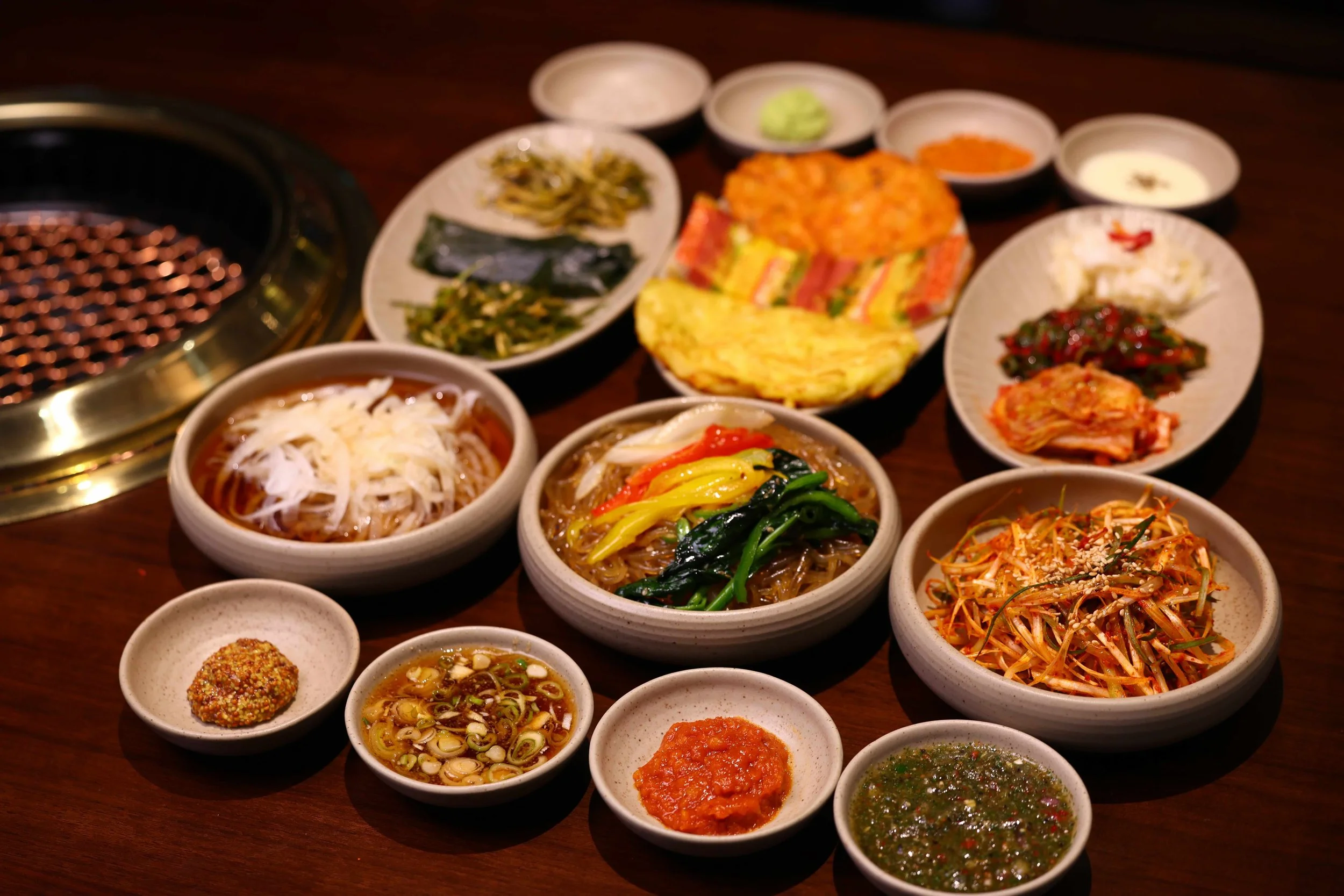
Korean BBQ is often remembered first for the sound and aroma of meat cooking over the grill, but the experience extends far beyond the beef itself. A well-composed Korean BBQ table is built around contrast. Rich meat is balanced by acidity, spice, freshness and texture, while sauces and banchan allow the flavor of each bite to change throughout the meal. This variety is one of the reasons Korean BBQ feels so different from a conventional steak dinner, where the meat and its accompaniments are usually predetermined before the plate arrives.
At Hanwoojeong in Myeongdong, our approach begins with premium 1++ Hanwoo, but we do not believe that every cut should be eaten in exactly the same way. Instead, we serve a selection of accompaniments that allow guests to explore the beef from different angles. Our sauce and seasoning selection includes salt, wasabi with ginger, chimichurri, truffle mayo, cumin, ssamjang and mustard. Some are rooted in Korean barbecue traditions, while others introduce more contemporary or international flavor combinations that work particularly well with richly marbled beef.
The same attention extends to the banchan surrounding the grill. Our jeon and japchae are prepared fresh daily, and the banchan served with the meal is available with unlimited refills. Rather than treating side dishes as decorative extras, we see them as part of the rhythm of the meal, providing moments of freshness, acidity, softness and texture between different cuts of Hanwoo.
For diners experiencing premium Korean beef for the first time, understanding how these sauces, seasonings and banchan work together can make the meal far more interesting. The goal is not to cover the beef with as much flavor as possible. The goal is to understand the meat first, then use each accompaniment to reveal something different.
Why Korean BBQ Is About More Than the Meat
One of the defining features of Korean BBQ is the freedom it gives the diner. A single piece of beef can be eaten simply with salt, paired with a fermented Korean sauce, combined with a fresh herb-based accompaniment, or followed by a bite of banchan that completely resets the palate.
This flexibility becomes especially useful when eating highly marbled Hanwoo. Premium Korean beef can be rich, and that richness builds gradually as the meal continues. If every bite is eaten in exactly the same way, even exceptional meat can begin to feel repetitive. Sauces and side dishes prevent that from happening by introducing different forms of contrast.
Acidity can cut through fat. Mustard can create sharpness. Cumin can bring warmth and earthiness. Truffle mayo can intensify richness, while chimichurri can make the same cut feel fresher and more aromatic. Traditional ssamjang adds fermentation and depth, while plain salt allows the beef itself to remain completely central.
This is why we prefer to think of Korean BBQ sauces as tools rather than rules. There is no single correct accompaniment for every diner or every cut. The most enjoyable experience often comes from tasting the beef in its simplest form first, then experimenting gradually.
Why Premium Hanwoo Should Be Tasted Simply First
When premium 1++ Hanwoo arrives at the table, the temptation can be to immediately try every sauce available. We recommend doing the opposite.
The first bite of a new cut is often most informative when eaten alone or with a very small amount of salt. Premium Hanwoo is valued for the interaction between marbling, tenderness, texture and the natural flavor of the beef, and those characteristics are easiest to understand before another strong flavor is introduced.
This becomes particularly important when several cuts are served together. Ribeye, ribeye cap, chuck flap tail and short rib may all belong to the same 1++ quality category, but they do not offer identical experiences. One may feel softer and richer, while another may retain a stronger beef character or more noticeable structure.
If every piece is immediately coated in the same sauce, those differences become harder to recognize.
Beginning simply creates a reference point. Once you understand what the meat tastes like on its own, a second bite with chimichurri or mustard becomes more meaningful because you can identify exactly what the accompaniment changes.
For a more detailed introduction to the different cuts, see our Hanwoo Cuts Guide.
Salt: The Purest Pairing for Premium Korean BBQ
Of all the accompaniments served at Hanwoojeong, salt is the simplest, and for premium beef it is often the most revealing.
Salt does not attempt to transform the flavor of the meat. Instead, it sharpens the natural savory qualities already present in the beef and allows the sweetness and richness of the fat to become more noticeable.
This is particularly effective with highly marbled Hanwoo. As the intramuscular fat begins to soften over the grill, the beef develops richness naturally. A small amount of salt can enhance that flavor without covering it.
For first-time diners, we often consider salt the best starting point because it allows the texture and marbling of each cut to remain easy to distinguish. A bite of ribeye with salt feels very different from a bite of short rib prepared the same way, making it easier to understand the character of each cut.
Salt is also useful throughout the meal when the palate begins to tire of more complex sauces. Returning to something simple can make the next piece of beef feel almost new again.
Wasabi and Ginger: Sharpness and Freshness for Rich Hanwoo
Wasabi and ginger provide a very different form of contrast.
Highly marbled beef can leave a rich coating across the palate, particularly when several pieces are eaten consecutively. Wasabi introduces a short, sharp intensity that cuts through that richness quickly, while ginger contributes a fresher aromatic quality that helps lift the overall bite.
The combination works particularly well with cuts that contain substantial marbling. The goal is not to make the beef taste strongly of wasabi or ginger, but to use a restrained amount to brighten the flavor.
Because wasabi can become dominant very quickly, moderation matters. A small touch is usually enough. The same principle applies to ginger, which works best when it provides fragrance and freshness rather than completely replacing the natural flavor of the beef.
This pairing is especially appealing to diners who enjoy premium meat but find extremely rich cuts overwhelming after several bites. The wasabi and ginger provide a cleaner finish and make it easier to return to the grill with a refreshed palate.
Chimichurri: Fresh Herbs Against Rich Korean Beef
Chimichurri is not a traditional Korean BBQ sauce, and we do not present it as one. Instead, it is included because its fresh herbal character creates an excellent contrast with premium Hanwoo.
A good chimichurri brings brightness, acidity and aromatic herbs into a meal that is otherwise centered around grilled meat and rich intramuscular fat. When paired with a well-marbled cut, those fresh flavors can make the beef feel lighter without stripping away its character.
This pairing is particularly useful later in the meal, after the diner has already experienced several pieces with simple seasoning. The difference is immediately noticeable. Where salt highlights the natural flavor of the beef, chimichurri adds another layer entirely, turning the same cut into a fresher and more aromatic bite.
It can also work particularly well with cuts that have stronger beef character. The herbs add complexity, while the acidity helps balance the fat.
For guests who enjoy contemporary steakhouse flavors as well as Korean barbecue, chimichurri offers a natural bridge between the two experiences.
Truffle Mayo: A Rich Pairing for a Luxurious Bite
Truffle mayo moves in the opposite direction.
Rather than cutting through the richness of Hanwoo, it adds another layer of richness and aroma. The creamy texture of mayonnaise works together with the marbled beef, while truffle introduces a distinctive earthy fragrance.
Because both the beef and the sauce are rich, this is not necessarily the accompaniment we would recommend for every bite. It is much more effective when treated as a deliberate variation during the meal.
A small amount with a piece of grilled beef can create a luxurious, almost indulgent bite. The contrast here comes less from acidity and more from aroma, as the truffle changes the perception of the beef even though the underlying richness remains.
This pairing may be particularly appealing to diners who enjoy contemporary premium dining and stronger aromatic flavors.
It is also a good example of how Hanwoojeong approaches Korean BBQ without limiting every accompaniment to traditional combinations. Premium beef can be respected without being confined to one style of seasoning.
Cumin: A Warm, Savory Contrast
Cumin brings another completely different dimension to grilled Hanwoo.
Its warm, earthy aroma is particularly recognizable and works naturally with meat cooked over high heat. Unlike creamy or fermented sauces, cumin is dry and aromatic, which means it can change the flavor of the beef without adding additional richness.
For guests familiar with grilled meat traditions from other parts of Asia, cumin may also feel surprisingly familiar. Its fragrance pairs naturally with caramelized meat, particularly when the exterior has developed a good sear.
With Hanwoo, we recommend using cumin selectively rather than applying it heavily. Premium beef already carries considerable flavor, and the purpose is to complement rather than overpower it.
A small amount can work especially well with cuts that have stronger meat character and slightly more structure. It offers a completely different experience from salt or ssamjang and adds variety to a longer Korean BBQ meal.
Ssamjang: The Classic Korean BBQ Accompaniment
Among the sauces served at Hanwoojeong, ssamjang is the one most closely associated with traditional Korean BBQ.
Ssamjang is a fermented Korean condiment generally built around soybean paste and chili paste, often combined with additional seasonings such as garlic and sesame. Its flavor is savory, salty, slightly spicy and deeply fermented.
It is particularly well suited to grilled meat because it brings together several strong flavors in a small amount.
With premium Hanwoo, however, restraint remains important. The complexity of ssamjang can easily dominate the natural flavor of a delicately marbled cut if too much is used.
For this reason, we recommend tasting the beef simply first and introducing ssamjang once you understand the character of the cut.
Ssamjang also works naturally as part of a larger Korean BBQ bite, especially when combined with vegetables or other banchan. In this context, it becomes one part of a layered experience rather than the only flavor surrounding the beef.
For international diners who want to experience a more traditional Korean BBQ flavor profile, ssamjang is one of the most important accompaniments to try.
Mustard: Sharpness That Cuts Through Marbling
Mustard is particularly effective with rich meat because its sharpness helps counterbalance fat.
Where truffle mayo amplifies richness, mustard creates contrast. A small amount can make heavily marbled Hanwoo feel cleaner and more defined, especially later in the meal when the palate has already experienced several rich cuts.
The acidity and pungency of mustard work particularly well with beef that has a strong savory profile. It brings brightness without adding sweetness or heaviness, making it a useful accompaniment for diners who prefer cleaner flavors.
Mustard can also help reveal the texture of the meat because it does not coat the palate as heavily as a creamy sauce.
Like wasabi, it should be used carefully. The goal is to introduce sharpness, not to erase the flavor of the Hanwoo.
Various sauces for Various flavours
The sauces served at Hanwoojeong are intentionally different from one another.
Salt keeps the experience pure. Wasabi and ginger introduce sharpness and freshness. Chimichurri adds herbs and acidity. Truffle mayo intensifies richness. Cumin contributes warmth and aromatic spice. Ssamjang brings traditional Korean fermentation, while mustard provides clean pungency.
Because the flavor profiles are so different, there is no need to choose one sauce and use it throughout the entire meal.
We encourage guests to experiment gradually.
Taste the first piece of a cut simply, then try another with one accompaniment. If you move to a different cut, return to salt or no sauce at all before experimenting again.
This approach makes the meal more dynamic and allows the same beef to reveal different characteristics.
What Is Banchan in Korean BBQ?
Sauces are only one part of the Korean BBQ table. Banchan, the small side dishes served alongside a Korean meal, plays an equally important role.
For international visitors, banchan can sometimes seem like a collection of small extras that arrive before the main course. In Korean dining culture, however, they are an integral part of the meal.
Different banchan provide different forms of contrast. Some are fresh and acidic, others are soft and savory, and some provide sweetness or texture.
When eating richly marbled beef, these contrasts become particularly valuable.
Banchan allows the diner to step away from the richness of the grill for a moment before returning to the next cut. The result is a meal that feels more balanced and less repetitive.
At Hanwoojeong, we take particular pride in our banchan because dishes such as jeon and japchae are prepared fresh daily rather than treated as secondary additions to the premium beef.
Fresh Jeon Prepared Daily at Hanwoojeong
Jeon is a broad category of Korean pan-fried dishes prepared with ingredients coated lightly in batter or egg before cooking.
Depending on the ingredients, jeon can be delicate, savory, crisp around the edges and soft in the center. It is a familiar part of Korean home cooking and traditional dining, and it works especially well as part of a Korean BBQ meal.
At Hanwoojeong, our jeon is made fresh daily.
Its softer texture and savory flavor create a natural break between pieces of grilled Hanwoo. While the beef is intense and rich, jeon provides something more comforting and understated.
Fresh preparation matters because jeon changes noticeably as it sits. The texture and aroma are best when it has been prepared with care rather than simply treated as a decorative side dish.
Including freshly prepared jeon as part of the banchan reflects how we want the entire table to feel. The premium experience should not stop at the meat.
Japchae Made Fresh Daily
Japchae is another dish that many international visitors already recognize, but it takes on a different role when served as part of a Korean BBQ table.
The glass noodles have a distinctive soft, springy texture, while the vegetables and seasoning create a gentle savory sweetness. Compared with richly marbled beef, japchae feels lighter and softer on the palate.
At Hanwoojeong, our japchae is also prepared fresh daily.
It works particularly well between different Hanwoo cuts because its flavor is noticeable without being overly aggressive. A small portion can provide a break from the grill before returning to another piece of beef.
For visitors who may have previously encountered japchae only as a separate restaurant dish, experiencing it as part of a broader Korean table helps show how Korean meals are structured around variety and sharing.
Unlimited Banchan Refills at Hanwoojeong
At Hanwoojeong, the banchan served with your meal comes with unlimited refills.
This is an important part of the experience because Korean BBQ is often enjoyed slowly, with meat grilled and served over the course of the meal rather than arriving all at once.
Banchan should therefore remain available throughout that progression.
Guests may want more japchae after a richly marbled cut, another piece of jeon later in the meal, or additional side dishes as they experiment with different sauces and combinations.
Unlimited refills allow the table to remain generous from beginning to end.
For us, this is also part of Korean hospitality. The banchan should not feel like something that needs to be rationed carefully because it arrived in a small dish at the start of the meal.
It is there to be enjoyed alongside the beef.
How to Pair Hanwoo Cuts With Hanwoojeong’s Sauces
Because different Hanwoo cuts offer different balances of fat, tenderness and beef flavor, they naturally work better with some accompaniments than others.
Ribeye is one of the most balanced cuts, so salt is an ideal starting point. After the first bite, chimichurri or mustard can add freshness without overwhelming its natural character.
Ribeye cap is particularly rich and tender, which makes sharp accompaniments useful. Wasabi with ginger or mustard can cut through the marbling and make the finish feel cleaner.
Chuck flap tail, known in Korean as salchisal, combines excellent marbling with distinct beef flavor. It can work beautifully with simple salt, but cumin or ssamjang can also complement its stronger savory profile.
Short rib tends to have more structure and pronounced beef character, allowing it to stand up particularly well to more assertive flavors such as cumin, mustard or ssamjang.
Truffle mayo can be used as a richer variation with any cut, particularly when the diner wants a more indulgent bite rather than a palate-cleansing one.
These are not strict rules. They are starting points.
One of the pleasures of Korean BBQ is discovering which combination suits your own palate.
To understand the differences between these cuts in greater detail, read our Hanwoo Cuts Guide.
What Should a First-Time Korean BBQ Diner Try?
If you are experiencing premium Hanwoo Korean BBQ for the first time, we recommend beginning with restraint.
Start with one piece of beef without sauce or with a small amount of salt. Pay attention to the texture, level of marbling and natural flavor.
For the next piece, try wasabi and ginger or mustard to experience how sharpness changes the perception of the fat.
Later, move toward chimichurri, cumin or ssamjang, each of which creates a more distinctive flavor profile.
Truffle mayo is best treated as a richer variation during the meal rather than the default accompaniment for every bite.
Between cuts, enjoy the banchan. Fresh jeon and japchae offer a natural break from the grill, while other side dishes can help reset the palate before the next piece of Hanwoo arrives.
This gradual approach allows you to experience both the quality of the beef and the variety of the Korean BBQ table.
Why Korean BBQ Sauces Should Complement Premium Beef
The most important principle when pairing sauces with premium Hanwoo is balance.
A good sauce does not need to make the meat taste better by covering it. Instead, it should reveal another aspect of the beef or change the experience in an interesting way.
Salt emphasizes natural flavor.
Wasabi and ginger refresh the palate.
Chimichurri adds brightness.
Truffle mayo brings indulgence.
Cumin introduces warmth.
Ssamjang connects the meat to traditional Korean BBQ flavors.
Mustard adds sharpness.
Each has a purpose, but none needs to dominate every bite.
This is especially relevant when eating 1++ Hanwoo because the beef already contains significant flavor and richness of its own. Understanding that balance is part of what separates simply eating expensive meat from actually experiencing premium Korean beef.
To learn more about Korea’s highest beef quality grade, see our Understanding 1++ Hanwoo Guide.
Korean BBQ Banchan at Hanwoojeong
At Hanwoojeong, we believe that a premium Korean BBQ experience should feel complete from the moment the table is set.
The 1++ Hanwoo is naturally the centerpiece, but the quality of the meal is also reflected in everything surrounding it.
Our jeon and japchae are prepared fresh daily, while the banchan served with your meal is available with unlimited refills. Combined with our selection of seven sauces and seasonings, this gives guests the freedom to explore different flavors throughout the meal rather than eating every cut in the same way.
The result is a table that feels generous, varied and unmistakably Korean, while still allowing room for contemporary pairings that work especially well with premium beef.
Visitors who would like to see the cuts and dishes currently available can explore the Hanwoojeong Menu.
Frequently Asked Questions About Korean BBQ Sauces and Banchan
-
Hanwoojeong serves over seven accompaniments with premium Hanwoo: salt, wasabi with ginger, chimichurri, truffle mayo, cumin, ssamjang and mustard. Each offers a different flavor profile, ranging from simple and traditional to fresh, rich or aromatic.
-
There is no single best sauce because different Hanwoo cuts respond differently to seasoning. For the first bite, we recommend starting with salt or tasting the meat without sauce so that its natural flavor and texture remain clear.
-
Ssamjang is one of the most traditional Korean BBQ sauces and pairs naturally with grilled meat. However, premium beef can also be enjoyed with simple salt or more contemporary accompaniments depending on personal preference.
-
Ssamjang is a fermented Korean condiment generally made using soybean paste and chili paste together with other seasonings. It has a savory, salty and slightly spicy flavor and is commonly served with Korean BBQ.
-
Yes. Hanwoojeong serves wasabi together with ginger as one of the accompaniments for premium Hanwoo. The sharpness and freshness can work particularly well with heavily marbled cuts.
-
Yes. Banchan is served as part of the dining experience at Hanwoojeong, including dishes such as fresh daily jeon and japchae.
-
Yes. The banchan served with the meal is available with unlimited refills.
-
At Hanwoojeong, freshly prepared japchae is included as part of the banchan experience rather than requiring guests to order it separately.
-
Premium Hanwoo can certainly be enjoyed with sauces, but we recommend tasting each new cut simply first. Once you understand the natural flavor and texture of the beef, different sauces can be introduced to create contrast and variety.
Experience Korean BBQ in Myeongdong at Hanwoojeong
Korean BBQ is not defined by one sauce, one side dish or even one piece of meat. Its appeal comes from the interaction between everything on the table.
At Hanwoojeong, premium 1++ Hanwoo forms the center of that experience, while the accompaniments allow each guest to approach the beef differently throughout the meal.
Salt lets the natural meat speak for itself. Wasabi and ginger introduce freshness. Chimichurri brings herbs and acidity. Truffle mayo adds richness, cumin offers warm spice, ssamjang provides the familiar depth of Korean fermentation, and mustard cuts cleanly through marbling.
Around the grill, fresh daily jeon and japchae add another layer to the experience, while unlimited banchan refills allow the table to remain generous from the beginning of the meal to the end.
The result is a style of Korean BBQ that respects the quality of premium Hanwoo while giving diners enough variety to make every bite feel different.
Whether you are trying Korean BBQ for the first time, exploring premium Hanwoo during a visit to Seoul, or already familiar with Korean beef and looking for a more refined experience, understanding the sauces and banchan surrounding the grill makes the meal considerably more rewarding.
Explore the Hanwoojeong 1++ Hanwoo Menu, learn more about Korean beef in our What Is Hanwoo? Guide, compare our premium cuts through the Hanwoo Cuts Guide, or reserve a table at Hanwoojeong in Myeongdong for your next Korean BBQ experience.
Address: Myeongdong 3-gil 44 3rd Floor
Nearest Subway Station:
Euljiro-1-ga Station (Line 2) Exit 5, 1-minute walk
Myeongdong Station (Line 4) Exit 6, 10-minutes walk
Follow us on Instagram : @hanwoojeong
