
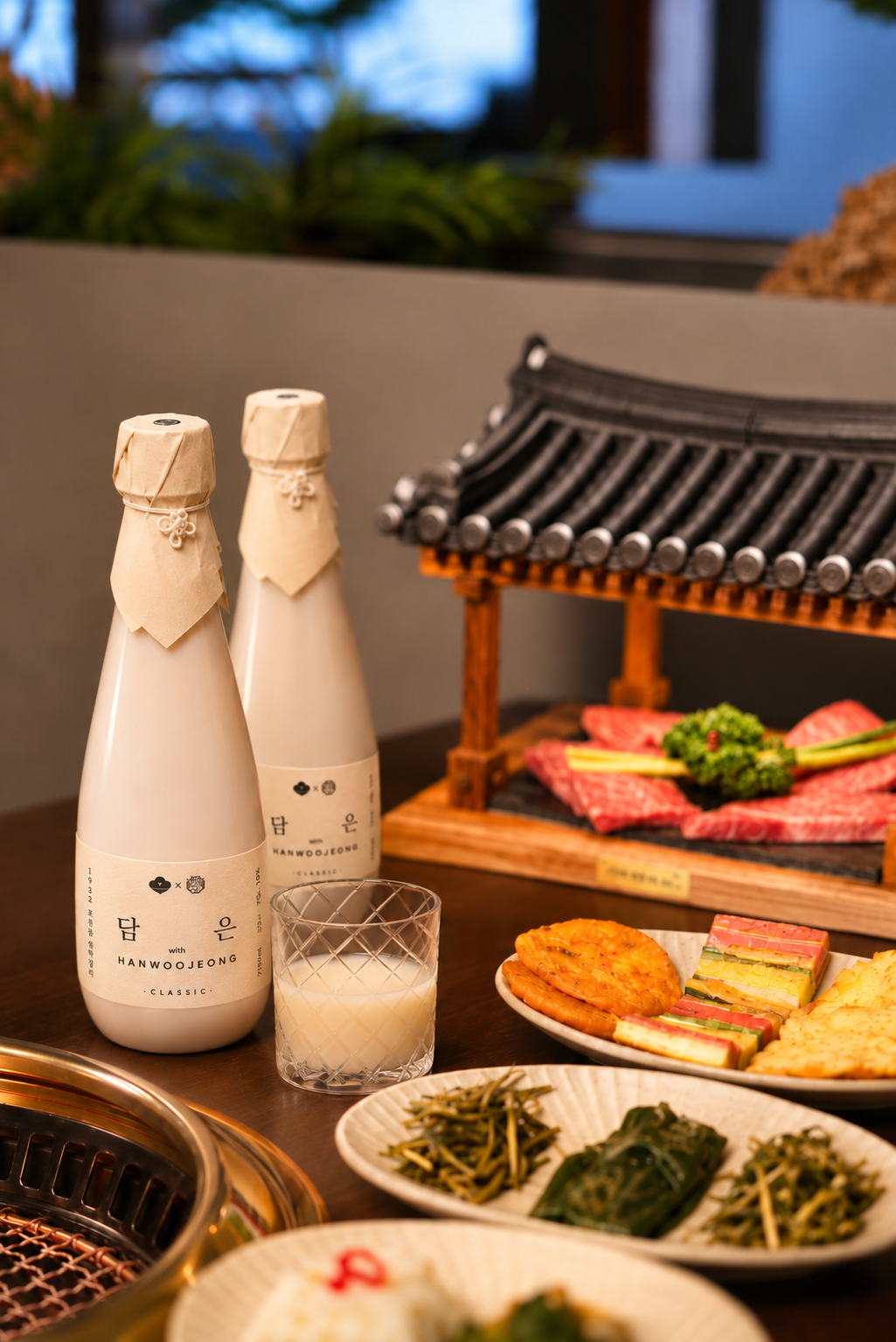
When visiting Seoul, Korean BBQ is often at the top of every traveler's food list. From sizzling beef cooked over charcoal to traditional Korean side dishes, the experience offers an introduction to some of Korea's most recognizable flavors.
But while many visitors automatically reach for soju or Korean beer, there is another traditional Korean alcoholic beverage worth discovering: makgeolli (막걸리).
Known for its distinctive milky appearance, smooth texture, and fermented rice flavor, makgeolli has been enjoyed in Korea for centuries. Today, it is experiencing renewed interest as traditional Korean brewing meets contemporary dining culture.
For travelers searching for makgeolli in Myeongdong, understanding Korean rice wine can make a visit to Seoul even more memorable.
Whether you are exploring traditional Korean drinks for the first time, looking for the best alcohol to pair with Korean BBQ, or searching for a restaurant serving premium makgeolli in Seoul, this guide will introduce you to everything you need to know.
At HANWOOJEONG (한우정), a premium Korean BBQ restaurant in Myeongdong, guests can experience Korean rice wine alongside carefully selected 1++ Hanwoo beef, traditional charcoal grilling, and refined Korean dining.
From understanding what makgeolli tastes like to discovering which Korean BBQ dishes pair best with it, here is your complete guide to enjoying Korean rice wine in Seoul.
What Is Makgeolli? Understanding Traditional Korean Rice Wine
Makgeolli, written 막걸리 in Korean, is a traditional Korean alcoholic beverage produced through the fermentation of rice or other grains.
Often described in English as Korean rice wine, makgeolli is known for its cloudy white appearance, gently fermented aroma, and distinctive combination of sweetness and acidity.
Unlike conventional grape wine, which is generally clear after filtration, makgeolli typically retains some of the rice particles and fermentation-derived solids from the brewing process.
These suspended particles give the beverage its characteristic milky appearance and fuller mouthfeel.
Makgeolli belongs to a broader category of Korean traditional alcoholic beverages called takju (탁주), meaning cloudy or opaque liquor.
Although the terms makgeolli and takju are closely connected, makgeolli is the more familiar name used by restaurants, breweries, and consumers.
Traditionally, makgeolli was associated with agricultural communities throughout Korea. It was an accessible fermented beverage enjoyed alongside everyday meals and shared during social gatherings.
Over time, its role expanded beyond rural drinking culture.
Today, makgeolli can be found in traditional Korean restaurants, contemporary Korean dining establishments, specialty liquor shops, and premium restaurants throughout Seoul.
Some varieties are light, gently carbonated, and refreshing. Others are richer, creamier, more concentrated, or noticeably stronger in alcohol content.
This diversity is one reason makgeolli has become increasingly interesting to visitors who want to explore Korean food culture beyond familiar dishes like bibimbap, bulgogi, and Korean fried chicken.
For travelers interested in Korean culinary traditions, trying makgeolli offers a different perspective on the country's drinking culture.
Rather than treating alcohol as separate from the meal, Korean dining often brings beverages and food together as part of a shared experience.
How Is Makgeolli Made?
The traditional production of makgeolli centers on three essential ingredients:
Rice or another suitable grain
Water
Nuruk (누룩), Korea's traditional fermentation starter
Nuruk contains microorganisms and enzymes that help convert grain starch into fermentable sugars, allowing fermentation to take place.
During production, rice is prepared and combined with water and nuruk. The mixture is fermented under controlled conditions, during which starches are broken down and sugars are converted into alcohol.
The resulting beverage develops flavors influenced by the rice, fermentation starter, temperature, fermentation period, and brewing techniques.
Unlike highly refined alcoholic beverages, makgeolli is generally only coarsely filtered, leaving some grain-derived material suspended in the liquid.
This is what contributes to its opaque appearance and characteristic texture.
Why Does Makgeolli Look Milky?
One of the first things visitors notice about Korean rice wine is its cloudy, almost milk-like appearance.
However, traditional makgeolli is not made from milk.
Its appearance comes from fine grain particles and other components remaining after fermentation and filtration.
Depending on the variety, the liquid may appear bright white, cream-colored, or slightly beige.
Some makgeolli has a light and flowing consistency, while richer versions can feel noticeably fuller on the palate.
The natural sediment may also settle toward the bottom of the bottle during storage.
This is why some makgeolli bottles are gently mixed before serving, although the appropriate handling depends on the specific product and whether it contains carbonation.
Is All Makgeolli the Same?
Not at all.
Just as wines can differ according to grape varieties, regions, and production methods, Korean makgeolli can vary significantly between breweries.
Differences in rice selection, fermentation techniques, aging conditions, filtration, and added ingredients can influence:
Sweetness and acidity
Body and texture
Alcohol strength
Aroma and flavor
Carbonation
Overall balance
Some varieties are deliberately light and refreshing, while others emphasize the natural richness of rice.
This distinction becomes particularly important when selecting makgeolli to accompany a premium Korean BBQ meal.
What Does Makgeolli Taste Like?
If you have never tried Korean rice wine, the easiest way to describe makgeolli is as a fermented rice beverage with a combination of sweetness, gentle acidity, and a distinctive grain character.
However, there is no single flavor profile shared by every makgeolli.
Depending on the style, you may notice several characteristics.
1. Natural Rice Sweetness
Many makgeolli varieties have a recognizable grain sweetness produced by the fermentation process.
This sweetness can be subtle or pronounced.
Some versions taste lightly sweet and refreshing, while others offer a richer impression of rice, almost resembling the grain notes found in traditional rice-based desserts.
2. Gentle Fermented Acidity
Fermentation can introduce a pleasant tanginess that distinguishes makgeolli from many other alcoholic beverages.
Depending on the brewing method, this acidity may be mild and rounded or more noticeable.
When balanced well, it can help make makgeolli feel refreshing alongside rich Korean dishes.
3. Smooth, Cloudy Texture
Unlike a typical clear spirit, makgeolli has a distinctive mouthfeel resulting from its suspended rice solids.
Some varieties are light and delicate, while others are creamy and full-bodied.
The texture is an important part of the drinking experience and one of the reasons makgeolli can feel particularly suitable for enjoying alongside food.
4. Fermented Grain Aromas
Depending on the product, makgeolli may offer aromas reminiscent of steamed rice, cereals, yeast, or other fermentation-derived notes.
These aromas contribute to its traditional character without necessarily making it taste strongly alcoholic.
5. Carbonation, Depending on the Variety
Some makgeolli is naturally or deliberately carbonated, giving it a lightly sparkling character.
Other varieties have little or no noticeable carbonation.
If you prefer smoother beverages, it is worth asking your restaurant which style of makgeolli is being served.
For first-time drinkers, understanding these differences can make choosing Korean rice wine much easier.
Rather than assuming every makgeolli tastes alike, consider whether you prefer a lighter, refreshing style or a richer, more substantial one.
Makgeolli vs Soju: What Is the Difference?
Visitors exploring Korean alcohol in Seoul often ask whether they should order makgeolli or soju with Korean BBQ.
Both are important parts of Korean drinking culture, but they offer very different experiences.
Makgeolli is a fermented, cloudy rice-based beverage. It typically has a fuller texture and a flavor influenced by grain sweetness, acidity, and fermentation.
Many everyday makgeolli varieties contain approximately 4–8% alcohol, although premium and specialty products may be considerably stronger.
Soju, by contrast, is generally clear and has a lighter body. Modern commercial soju often contains approximately 12–20% alcohol, although strengths and production methods vary.
Soju is commonly served chilled in small glasses and enjoyed alongside grilled meat, spicy dishes, and traditional Korean meals.
Makgeolli is typically served in larger portions and is more often appreciated for its distinctive flavor and texture.
Which Is Better With Korean BBQ?
Neither drink is automatically better.
The choice depends on your preferences and the dishes you plan to order.
If you enjoy a clean, relatively neutral alcoholic beverage, soju may suit your tastes.
If you prefer a drink with more body, grain character, and a balance of sweetness and acidity, makgeolli can be an interesting alternative.
It also depends on the meat.
Korean BBQ includes everything from leaner beef cuts to richly marbled Hanwoo, spicy pork, and sweet soy-marinated short ribs.
A beverage that complements one dish may create a completely different experience with another.
At premium Hanwoo restaurants, exploring these contrasts can be part of the enjoyment.
Why Does Makgeolli Pair Well With Korean BBQ?
One of the most enjoyable aspects of Korean cuisine is the interaction between different flavors.
A typical Korean BBQ meal rarely consists of grilled meat alone.
Instead, the table is filled with sauces, vegetables, fermented side dishes, rice, and other accompaniments.
These dishes create contrasts between richness, saltiness, acidity, spice, sweetness, and freshness.
Makgeolli can fit naturally into this combination.
Balancing the Richness of Grilled Beef
Premium Korean Hanwoo is especially appreciated for its marbling.
Marbling refers to the fine intramuscular fat distributed throughout the meat, contributing to tenderness, juiciness, and flavor.
When cooked over charcoal, these qualities become particularly noticeable.
However, richly marbled beef can also leave a lingering feeling of richness on the palate.
A makgeolli with balanced acidity can provide a contrasting sensation between bites.
Rather than overpowering the beef with a strong spirit, the drink introduces its own grain character and fermentation notes.
The pairing works best when the beverage complements the meat rather than competing with its flavor.
Complementing Smoky Charcoal-Grilled Flavors
Charcoal grilling creates aromas and browned surfaces that are central to Korean BBQ.
As the beef cooks, the exterior develops savory notes while the interior retains its natural tenderness.
Depending on the makgeolli, its grain sweetness and fermented character can offer a pleasant contrast to these roasted flavors.
A richer rice wine may feel especially appropriate with deeply flavored cuts, while a lighter version can be more refreshing between bites.
Working With Korean Sauces and Seasonings
Korean BBQ is often served with sauces such as ssamjang, salt, mustard, and wasabi.
At HANWOOJEONG, guests can explore different accompaniments, including salt, wasabi with ginger, chimichurri, truffle mayo, cumin, ssamjang, and mustard.
Each seasoning changes the character of the beef.
For example, salt highlights the natural flavor of the meat, while ssamjang introduces fermented soybean notes, spice, and sweetness.
Makgeolli brings another dimension to these combinations.
A lightly tangy rice wine may contrast with rich sauces, while a fuller-bodied style can stand up to more intense seasonings.
To explore these combinations further, read our Korean BBQ Sauces and Banchan Guide.
Which Hanwoo Beef Cuts Pair Best With Makgeolli?
Not all Korean beef cuts taste the same.
Even within premium 1++ Hanwoo, different cuts offer distinctive levels of marbling, tenderness, and flavor intensity.
Understanding these differences can help you appreciate the experience of pairing Korean rice wine with Korean BBQ.
Hanwoo Ribeye (등심)
Ribeye is valued for its balance of beef flavor, tenderness, and marbling.
When grilled over charcoal, the meat develops a savory exterior while retaining a juicy interior.
A makgeolli with moderate acidity and sufficient body can provide an enjoyable contrast to the richness of ribeye.
For a first pairing, try a piece of ribeye with a small amount of salt.
Take a sip of makgeolli afterward and notice how the grain flavor interacts with the beef.
This simple approach allows you to appreciate both products without introducing too many competing seasonings.
Hanwoo Chuck Flap Tail (살치살)
Chuck flap tail is known for its rich marbling and tender texture.
It is one of the more indulgent cuts commonly associated with premium Korean BBQ.
Because of its pronounced richness, a rice wine with some acidity can provide a welcome contrast.
A full-bodied makgeolli may also complement the meat's substantial flavor.
Try the first bite without sauce, then experiment with a small amount of wasabi or mustard.
The difference between the two combinations can be surprisingly noticeable.
Hanwoo Ribeye Cap (새우살)
Ribeye cap is prized for its distinctive texture, tenderness, and marbling.
Its rich, delicate character makes it a particularly interesting cut to taste with minimal seasoning.
A balanced makgeolli allows you to explore the contrast between the beef's savory flavor and the beverage's fermented rice notes.
At HANWOOJEONG, ribeye cap is included in our premium Hanwoo sets, making it accessible to guests who want to compare multiple cuts during one meal.
Hanwoo Short Rib (갈비살)
Short rib offers a pronounced beef flavor and satisfying texture.
Compared with some more delicate cuts, it can deliver a stronger savory impression.
This creates an opportunity to enjoy it with a richer style of makgeolli.
The grain sweetness of certain makgeolli varieties may provide a complementary contrast to the deeper flavors of grilled short rib.
For guests who enjoy bold flavors, this pairing is worth exploring.
Hanwoo Top Blade (부채살)
Top blade offers a different balance of texture and beef flavor.
It can be particularly enjoyable as part of a tasting progression that moves from lighter or leaner cuts toward richer selections.
With makgeolli, consider tasting it simply before adding sauces.
This allows you to notice the relationship between the beef's natural flavor and the beverage's body.
If you are unsure which cuts to order, explore our Complete Guide to Premium Hanwoo Beef Cuts.
What Korean Side Dishes Go Best With Makgeolli?
Although makgeolli can accompany grilled Hanwoo, it is also traditionally associated with Korean side dishes and savory snacks.
In fact, one of the most recognizable Korean food pairings is makgeolli and jeon, or Korean savory pancakes.
At HANWOOJEONG, the dishes surrounding the grill offer several opportunities to explore traditional Korean flavor combinations.
1. Korean Pancakes (Jeon)
Jeon refers to a variety of Korean dishes commonly prepared by coating ingredients in batter or egg before pan-frying them.
Depending on the ingredients, they can be crispy, savory, mildly spicy, or subtly sweet.
At HANWOOJEONG, guests can enjoy an assortment of Korean pancakes, including:
Kimchi Jeon (김치전) — A savory Korean pancake featuring kimchi, offering a combination of fermented acidity, spice, and crisp texture.
Gamja Jeon (감자전) — A Korean potato pancake with a satisfying texture and mild potato flavor.
Kkochi Jeon (꼬치전) — A traditional Korean skewered pancake featuring ingredients arranged on skewers and coated with egg before cooking.
The richness of pan-fried jeon and the fermented characteristics of makgeolli create a familiar Korean combination.
For first-time visitors who want to try a traditional Korean drinking pairing, jeon and makgeolli are an excellent place to begin.
2. Traditional Korean Kimchi
Kimchi is one of Korea's most recognizable fermented foods, but it exists in many different varieties.
At HANWOOJEONG, our kimchi selection includes:
Baechu Kimchi (배추김치) — Traditional spicy napa cabbage kimchi, known for its fermented flavor and characteristic seasoning.
Baek Kimchi (백김치) — White kimchi, prepared without the usual red chili seasoning and appreciated for its milder, refreshing character.
Pa Kimchi (파김치) — Green onion kimchi, offering a stronger aromatic flavor and distinctive fermented spice.
Each variety creates a different interaction with makgeolli.
Spicy kimchi can offer bold contrast, while white kimchi allows the rice wine's gentler characteristics to remain more noticeable.
When enjoying premium Hanwoo, alternating between grilled beef, kimchi, and makgeolli creates a varied dining experience.
3. Korean Pickled Vegetables (Jangajji)
Jangajji (장아찌) refers to Korean preserved or pickled vegetables, commonly prepared using soy sauce, salt, vinegar, or other seasonings.
These accompaniments are particularly useful when enjoying richly marbled beef because their acidity and savory character provide contrast.
At HANWOOJEONG, selections include:
Gochu-chae Jeorim (고추채 절임) — Pickled shredded chili peppers.
Maneuljjong Jangajji (마늘쫑 장아찌) — Pickled garlic scapes.
Myeongi-namul Jangajji (명이나물 장아찌) — Pickled wild garlic leaves.
Their contrasting textures and flavors help create variety between bites of Korean BBQ.
Try combining a slice of grilled Hanwoo with a small amount of pickled vegetables before taking a sip of makgeolli.
4. Japchae (잡채)
Japchae is a classic Korean dish made with glass noodles, vegetables, and savory seasoning.
Its gently sweet and savory flavors make it a popular accompaniment to Korean meals.
With makgeolli, japchae creates a different experience from spicy kimchi or grilled meat.
Its softer flavors can complement the grain sweetness of certain rice wines without introducing strong acidity or heat.
Together, these dishes demonstrate that Korean rice wine is not limited to a single pairing.
It can be appreciated throughout an entire Korean meal.
Introducing HANWOOJEONG × DAMUN Classic Makgeolli in Myeongdong
For guests who want to experience premium makgeolli in Myeongdong, HANWOOJEONG introduces DAMUN Classic Makgeolli as part of our Korean dining experience.
Produced by Pocheon Ildong Brewery in Gyeonggi Province, DAMUN represents a modern approach to Korea's traditional rice wine culture.
The brewery traces its heritage to 1932, with its brewing tradition continuing through four generations.
DAMUN Classic is made using rice from Pocheon and traditional nuruk, reflecting the importance of carefully selected ingredients in Korean brewing.
According to the producer, the Classic variety uses an increased proportion of rice to develop a fuller body and bring forward natural rice sweetness.
It also undergoes low-temperature maturation to create a more rounded flavor and aroma.
Unlike some commercially produced sweetened beverages, DAMUN Classic is made without synthetic sweeteners.
The resulting style emphasizes rice character, texture, and balance.
What Makes DAMUN Classic Different?
While many familiar everyday makgeolli varieties are relatively light in alcohol and body, DAMUN Classic offers a more substantial interpretation.
Its key characteristics include:
Alcohol Content: 10% ABV
Bottle Size: 750 mL
Origin: Pocheon, Gyeonggi-do, South Korea
Main Brewing Ingredients: Rice and traditional nuruk
Style: Richer-bodied traditional Korean rice wine
Sweetness: Rice-forward natural sweetness
Maturation: Low-temperature aging
With an alcohol content of 10%, DAMUN Classic is stronger than many everyday makgeolli varieties.
This difference is worth considering, especially for travelers who are accustomed to lighter, lower-alcohol rice wines.
Its fuller body makes it an interesting option for pairing with substantial Korean dishes, including premium charcoal-grilled Hanwoo.
A Traditional Korean Beverage Presented With Contemporary Elegance
The HANWOOJEONG × DAMUN presentation reflects the character of both brands.
The ivory-toned bottle, understated typography, and fabric-wrapped cap create an elegant appearance that complements HANWOOJEONG's traditional Korean-inspired dining environment.
Served alongside premium Korean beef, the makgeolli becomes part of a broader experience centered on Korean ingredients, craftsmanship, and hospitality.
For visitors who usually associate Korean alcohol only with green soju bottles, DAMUN Classic introduces another side of Korean beverage culture.
It also provides a meaningful alternative for guests who prefer enjoying a distinctive rice wine alongside dinner.
HANWOOJEONG × DAMUN Classic Makgeolli
750 mL | 10% ABV | ₩24,000
Price and availability may change.
How to Drink Makgeolli Like a Local in Korea
If you are trying makgeolli for the first time, you may notice that it is served differently from soju, beer, or grape wine.
Although traditions vary, there are several common ways to enjoy Korean rice wine.
1. Serve Makgeolli Chilled
Makgeolli is generally enjoyed cold.
Serving it chilled can make its fermented acidity and grain character feel refreshing, particularly alongside rich or savory dishes.
The ideal temperature depends on the variety, but a chilled serving is a practical starting point for beginners.
2. Use the Appropriate Glass
Traditional Korean drinking culture sometimes features makgeolli served in small bowls.
However, many contemporary restaurants use glass tumblers or other dedicated drinking vessels.
At HANWOOJEONG, our makgeolli presentation features a textured glass that complements the understated appearance of DAMUN Classic.
The transparent glass also allows guests to appreciate the beverage's cloudy ivory color.
3. Understand the Natural Sediment
Because makgeolli is typically unrefined or lightly filtered, sediment may collect toward the bottom of the bottle.
For some products, gently mixing the contents while the bottle remains closed can help redistribute the sediment.
However, not every makgeolli should be handled in exactly the same way.
Carbonated varieties may build up pressure, so shaking them vigorously can cause the liquid to foam or spill when opened.
If you are unsure, ask the restaurant staff how the particular bottle should be served.
4. Take Small Sips and Appreciate the Flavor
Makgeolli is worth tasting slowly, particularly when trying a premium variety.
Notice its aroma, texture, sweetness, acidity, and finish.
Then consider how those characteristics change after a bite of grilled beef or a Korean side dish.
The aim is not simply to drink the beverage alongside the meal but to appreciate how the flavors interact.
5. Remember That Alcohol Strength Varies
Makgeolli is sometimes described as a light alcoholic beverage, but this is not true of every variety.
DAMUN Classic contains 10% alcohol by volume, which is stronger than many standard makgeolli products.
Enjoy it responsibly, especially when sharing a bottle during a long meal.
Where to Try Makgeolli and Korean BBQ in Myeongdong, Seoul
Myeongdong is one of Seoul's most popular destinations for international visitors.
Known for its busy shopping streets, Korean beauty stores, department stores, hotels, and street food, the neighborhood attracts travelers throughout the year.
For many visitors, food is a major part of exploring Myeongdong.
After spending the afternoon shopping or sightseeing, Korean BBQ offers an opportunity to sit down and experience a traditional shared meal.
However, not all Korean BBQ restaurants focus on the same ingredients or dining style.
Some specialize in casual pork barbecue, while others emphasize premium Korean beef and attentive tableside service.
Visitors searching for Korean rice wine in Myeongdong may also want a restaurant where the drink can be enjoyed alongside a complete Korean meal rather than as a standalone beverage.
This is where HANWOOJEONG offers a distinctive experience.
Premium 1++ Hanwoo Korean BBQ at HANWOOJEONG
HANWOOJEONG is a premium Korean BBQ restaurant located on the third floor of 44 Myeongdong 3-gil in central Seoul.
Our restaurant specializes in 1++ Korean Hanwoo beef, the highest quality grade within Korea's beef-grading system.
Hanwoo is Korea's native cattle breed and is valued for its characteristic marbling, tenderness, and rich flavor.
At HANWOOJEONG, our approach combines carefully selected beef with traditional charcoal grilling and professional tableside service.
Guests can enjoy the dining experience while our staff prepare the beef directly at the table.
This is particularly convenient for first-time visitors who may be unfamiliar with cooking premium Korean beef.
Our interior also draws inspiration from traditional Korean architecture, incorporating warm wooden elements and hanok-inspired details.
Together, these features create an environment where traditional Korean rice wine can be appreciated alongside one of Korea's most celebrated ingredients.
For more information about the restaurant and our beef selections, visit our HANWOOJEONG Myeongdong Korean BBQ homepage.
What to Order With DAMUN Makgeolli at HANWOOJEONG
If you are visiting HANWOOJEONG specifically to try makgeolli with Korean BBQ, choosing a selection of beef cuts is an enjoyable way to experience different pairings.
Rather than ordering only one cut, a shared Hanwoo set allows you to compare several textures and flavor profiles during the same meal.
HANWOO 400 Set — 400g
₩165,000 | Four Premium Hanwoo Cuts
Our Hanwoo 400 Set includes:
Ribeye (100g), Short Rib (100g), Chuck Flap Tail (100g), and Ribeye Cap (100g).
This selection introduces guests to four distinctive premium Hanwoo cuts.
Each offers a different balance of marbling, tenderness, and savory flavor.
Try alternating between the cuts and taking small sips of DAMUN Classic to notice how the pairing changes.
The set also includes one side dish.
HANWOO 500 Set — 500g
₩195,000 | Five Premium Hanwoo Cuts
Our Hanwoo 500 Set includes all four cuts from the 400g selection, plus Top Blade (100g).
For visitors who want to explore a wider range of Hanwoo flavors, this set offers additional variety.
Top Blade introduces another texture, allowing diners to compare it with richer cuts such as Ribeye Cap and Chuck Flap Tail.
This makes the 500g selection particularly interesting for guests who enjoy discovering how different beef cuts interact with traditional Korean rice wine.
One side dish is included.
HANWOO 600 Set — 600g
₩220,000 | Six Premium Hanwoo Cuts
Our Hanwoo 600 Set includes Ribeye, Short Rib, Chuck Flap Tail, Ribeye Cap, Top Blade, and Short Plate, with 100g of each cut.
With six distinctive selections, guests can explore a broader range of flavors and textures during one meal.
It is an option for diners who want a more extensive Hanwoo tasting experience.
The set includes one side dish.
You can explore the complete selection through our HANWOOJEONG Korean BBQ Menu.
Our Suggested Makgeolli and Hanwoo Pairing Experience
If it is your first time trying DAMUN Classic with premium Hanwoo, we recommend approaching the meal gradually.
Begin with a small sip of makgeolli on its own to appreciate its rice flavor and texture.
Next, try a piece of Hanwoo with minimal seasoning.
Then introduce small amounts of salt, wasabi, or another preferred condiment.
As the meal progresses, explore different cuts and side dishes, including kimchi, Korean pancakes, and pickled vegetables.
You may find that the same beverage tastes different depending on whether you have just eaten a richly marbled piece of beef or a tangy Korean side dish.
There is no required pairing order.
The experience is about discovering which combinations appeal most to your palate.
Is Makgeolli Worth Trying During Your Seoul Trip?
For travelers visiting Korea for the first time, makgeolli may be less familiar than soju or Korean beer.
However, its long history and variety of styles make it a valuable part of Korean food culture.
Trying makgeolli gives visitors an opportunity to explore something distinctly Korean.
It also introduces the idea that traditional Korean alcohol can have just as much variation in flavor, ingredients, and production methods as beverages from other culinary traditions.
A casual makgeolli served with jeon can provide one type of experience.
A premium makgeolli enjoyed alongside carefully grilled 1++ Hanwoo can offer something quite different.
Both reflect the versatility of Korean rice wine.
For visitors interested in Korean gastronomy, the most rewarding approach is often to experience makgeolli as part of a complete meal.
At HANWOOJEONG, the combination of premium beef, traditional side dishes, charcoal grilling, and DAMUN Classic creates an opportunity to explore several aspects of Korean dining culture in one setting.
Frequently Asked Questions About Makgeolli in Korea
What Is Makgeolli Made From?
Makgeolli is a traditional Korean fermented alcoholic beverage generally made using rice or other grains, water, and nuruk, a Korean fermentation starter.
Its cloudy appearance comes from fine particles and other components remaining after fermentation and filtration.
Is Makgeolli a Wine or Beer?
Makgeolli is commonly called Korean rice wine in English, although its ingredients and production process differ from grape wine.
It is a fermented grain-based alcoholic beverage.
Its cloudy appearance, grain character, and sometimes lightly sparkling texture distinguish it from typical grape wines.
What Does Makgeolli Taste Like?
Makgeolli can taste mildly sweet, tangy, grainy, and fermented, often with a smooth texture.
Some varieties have light carbonation, while others are still and full-bodied.
The exact flavor depends on the producer and brewing method.
Is Makgeolli Stronger Than Soju?
Usually, no. Many commercially available soju products contain more alcohol than everyday makgeolli.
However, makgeolli strength varies considerably.
DAMUN Classic contains 10% ABV, making it stronger than many standard makgeolli varieties.
Always check the alcohol content rather than assuming that all Korean rice wines have the same strength.
Is Makgeolli Sweet?
Some makgeolli is noticeably sweet, while other varieties are drier or more acidic.
Sweetness can come from residual sugars produced during fermentation, and some products contain additional sweeteners.
DAMUN Classic emphasizes rice-derived sweetness and is made without synthetic sweeteners, according to its producer.
Does Makgeolli Contain Milk?
No. Traditional makgeolli gets its milky appearance from suspended grain particles rather than dairy milk.
However, ingredients can vary between products, so guests with allergies or dietary restrictions should always check the specific label.
Is Makgeolli Gluten-Free?
Not necessarily.
Although rice itself is gluten-free, traditional nuruk may be made using wheat or other gluten-containing grains.
Guests who need to avoid gluten should verify the ingredients and allergen information for the specific makgeolli rather than assuming all rice wine is gluten-free.
Is Makgeolli Served Hot or Cold?
Makgeolli is generally served chilled.
Serving temperature can influence how its sweetness, acidity, and texture are perceived.
If you are trying a particular premium variety, ask the restaurant staff for the recommended serving method.
What Food Goes Best With Makgeolli?
Korean pancakes such as kimchi jeon and potato jeon are traditional choices.
Other popular pairing options include kimchi, savory Korean dishes, grilled meat, and Korean BBQ.
The best pairing depends on the style of makgeolli and your personal preferences.
Can You Drink Makgeolli With Korean BBQ?
Yes.
Makgeolli can complement Korean BBQ through its grain character, fermentation-derived acidity, and body.
It can be especially interesting with richly marbled beef, savory sauces, and traditional Korean side dishes.
What Is the Best Alcohol to Drink With Hanwoo?
There is no single best choice.
Soju, beer, wine, and makgeolli can all complement premium Hanwoo in different ways.
For guests who enjoy fuller-bodied fermented beverages, premium makgeolli is worth considering.
Where Can I Try Makgeolli in Myeongdong?
Visitors can explore Korean rice wine at restaurants and drinking establishments that serve makgeolli.
For guests interested in pairing premium makgeolli with 1++ Korean Hanwoo BBQ, HANWOOJEONG offers DAMUN Classic Makgeolli in Myeongdong.
Does HANWOOJEONG Serve Premium Makgeolli?
Yes.
HANWOOJEONG offers DAMUN Classic Makgeolli, a 10% ABV, 750mL Korean rice wine produced in Pocheon, Gyeonggi Province.
It can be enjoyed alongside the restaurant's premium Hanwoo beef and Korean side dishes.
Where Is HANWOOJEONG Located?
HANWOOJEONG is located at:
3F, 44 Myeongdong 3-gil, Jung-gu, Seoul, South Korea.
The restaurant is approximately one minute on foot from Euljiro-1-ga Station, Exit 5, on Seoul Subway Line 2.
It is also accessible from Myeongdong Station on Line 4, Exit 6, approximately ten minutes away on foot.
Does HANWOOJEONG Accept Reservations?
HANWOOJEONG accepts reservations subject to availability and its current reservation policy.
Guests are encouraged to check the restaurant's reservation information before visiting, especially when planning a special occasion or group meal.
Experience Premium Makgeolli and Korean BBQ in Myeongdong at HANWOOJEONG
Korean food culture extends far beyond the dishes themselves.
It is also about the ingredients, preparation techniques, beverages, and traditions that bring a meal together.
Makgeolli is an important part of that experience.
From its origins as a traditional fermented grain beverage to its growing presence in contemporary Korean dining, makgeolli continues to connect Korean culinary heritage with modern tastes.
For visitors discovering Korean rice wine for the first time, it offers an introduction to flavors that are different from familiar beers, spirits, and grape wines.
For those already familiar with makgeolli, premium varieties such as DAMUN Classic provide an opportunity to explore a richer interpretation of the traditional beverage.
At HANWOOJEONG, we bring this experience together with carefully selected 1++ Korean Hanwoo, charcoal grilling, traditional Korean side dishes, and attentive tableside service.
Whether you are visiting Seoul for the first time, planning a memorable dinner in Myeongdong, or looking for a Korean rice wine to enjoy with premium beef, we invite you to discover how Hanwoo and makgeolli can complement each other.
Explore the richness of premium Korean beef, the character of traditional Korean rice wine, and the enjoyment of sharing an authentic Korean meal.
HANWOOJEONG — Where Hanwoo Meets Tradition.
Visit HANWOOJEONG in Myeongdong, Seoul
Restaurant: HANWOOJEONG (한우정)
Specialty: Premium 1++ Hanwoo Korean BBQ
Featured Beverage: HANWOOJEONG × DAMUN Classic Makgeolli
Address: 3F, 44 Myeongdong 3-gil, Jung-gu, Seoul, South Korea
Korean Address: 서울특별시 중구 명동3길 44, 3층
Nearest Subway Station: Euljiro-1-ga Station (Line 2), Exit 5 — approximately 1 minute on foot
Alternative Station: Myeongdong Station (Line 4), Exit 6 — approximately 10 minutes on foot
Opening Hours: Daily, 11:30 AM – 2:00 AM
Contact: +82-2-318-2990
Menu: Explore Our Premium 1++ Hanwoo Menu
Directions: Find HANWOOJEONG in Myeongdong
Reservations: Plan Your Visit to HANWOOJEONG
Discover premium Korean BBQ and traditional rice wine in the heart of Myeongdong, Seoul.
Alcoholic beverages are available only to guests of legal drinking age. Please enjoy responsibly.
